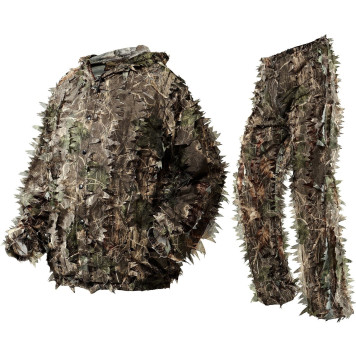
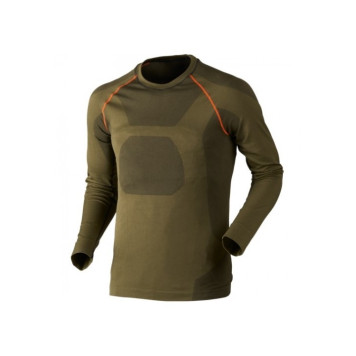
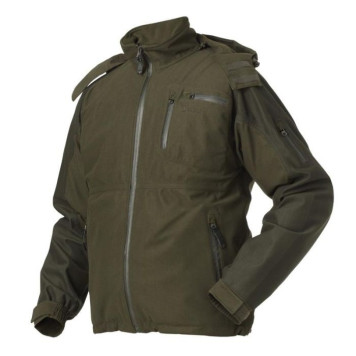
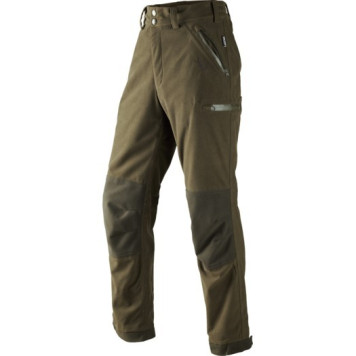
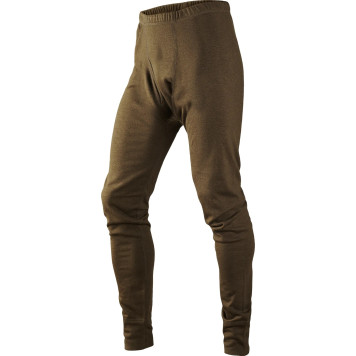
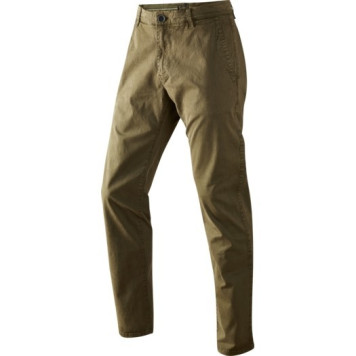
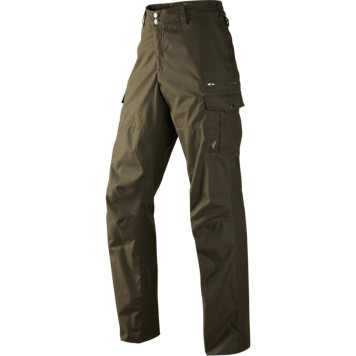
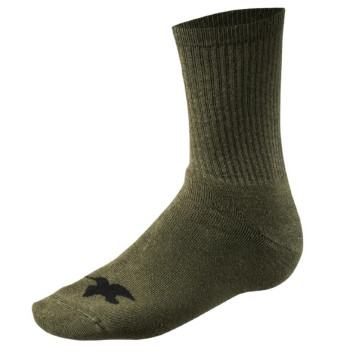
Hunting happens outdoors, often for hours without moving in a high seat, across a wet field on a driven hunt, or stalking along the tree line before dawn. Clothes made for the office or the school run fall apart out there: they soak through, let cold air in, rustle with every step, or give away your position too soon. This section holds clothing built for hunting specifically: warm, quiet, wind and rain resistant, usually in green, brown or camo. Matched to the season, the hunting method and the hours you plan to spend outside, clothing stops being an afterthought and becomes part of your gear.
What you'll find in this section
Three main subcategories sit under this hub: clothing for men, clothing for women and accessories. Each covers a different need, from a base layer to a hat or a pair of gloves.
Clothing for men
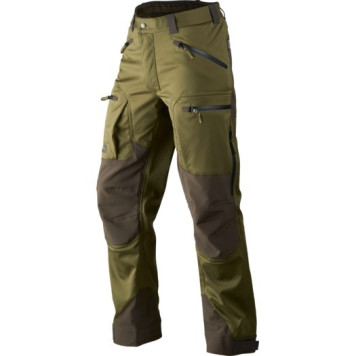
Men's clothing is the largest part of the section, with jackets, trousers, vests, base-layer sets and full outfits from SEELAND, Harkila and other hunting-focused brands. You will find warm winter pieces such as the Canada jacket in winter moss, alongside lighter autumn sets built for a driven hunt or a slow stalk.
Clothing for women
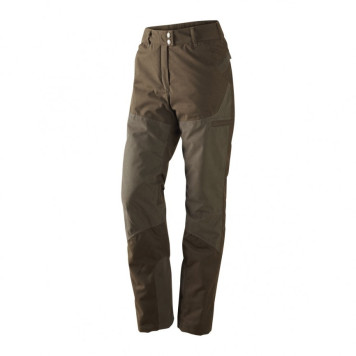
The women's hunting clothing range keeps the same fabrics and colors, quiet, camo or green, resistant to damp weather, but cuts them to fit a woman's build. It works as well for a day in a high seat as for a longer walk through the forest.
Accessories
The accessories range covers everything that finishes off an outfit: rain ponchos, hats, gloves and other small pieces that often decide whether you stay dry and warm through a full day outdoors.
How to choose the right layers for a hunt
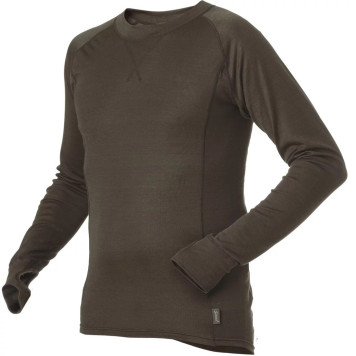
Build your outfit in three layers: base, insulating and outer, so you can adjust as the weather shifts through the day. A base layer, made of merino wool or a synthetic thermal fabric, moves sweat away from your skin, which keeps you from getting cold while sitting still for hours. On top of that goes an insulating layer, a vest or fleece you can remove once you warm up on a longer walk. The outer layer, a wind and rain resistant jacket or poncho, goes on last and comes off first. This setup lets you react to the weather instead of relying on one thick garment that is either too warm while moving or too cold while still.
Why quiet fabric and the right color matter
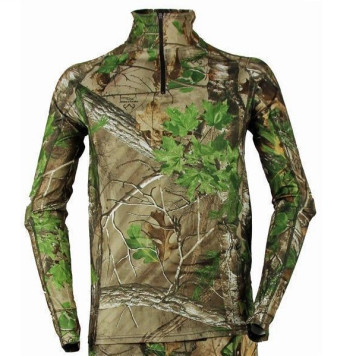
Game notices movement, sound and outline before it picks up your scent from a distance, so fabric and color need to work with you, not against you. A stiff or plastic-feeling fabric rustles every time you raise an arm or bend down, and that sound carries a surprising distance on a quiet morning. That is why hunting clothing is cut from soft, quiet fabric rather than the hard-shell material used in general outdoor wear. Color needs to match the terrain and the season too: green and brown work in wooded ground, and a camo pattern breaks up your outline further among leaves and brush. Bright colors, such as an orange vest, are not there to hide you at all; they exist for safety, so other hunters can see you on a driven hunt.
Clothing for different hunting methods
In a high seat you sit still for long stretches, so warmth and staying dry matter most; a thicker base-layer set and a wind-blocking jacket earn their place here. Stalking means moving slowly and quietly, so quiet fabric and a camo pattern matter more than extra insulation, since the movement itself keeps you warm. A driven hunt takes you through brush and wet undergrowth, so durable, fast-drying clothing and a visible vest or hat for safety count for more than warmth alone. Matching your outfit to how you will spend the day outside saves you from both getting cold and sweating through your layers.
How to care for hunting clothing
Cared for properly, this clothing lasts several seasons, so it is worth a few minutes after every hunt. Brush off dry mud before washing, and use a mild, low-scent detergent, since a strong scent can linger in the fabric and put game on alert the next time you wear it. Dry membrane or treated fabric naturally, away from a radiator, so the waterproof coating stays intact. Between seasons, store your clothing somewhere dry and away from strong-smelling items, so the fabric does not pick up an outside odor.
How to pick the right size
Try on hunting clothing over the layer you plan to wear underneath, since a jacket or trousers that fit fine on their own can end up tight once a fleece vest goes on beneath them. Sleeve and leg length need to stay comfortable even when you raise your arms or crouch, for example when getting ready for a shot from a high seat. If you are torn between two sizes, going up is usually the safer call, since an extra layer fits under a slightly looser garment, while a tight one leaves no room to add warmth on a colder day. Size charts from SEELAND, Harkila and other hunting brands often run differently from everyday clothing, so it is worth checking the specific model's measurements before you order.
Fabric built to work for you
Hunting clothing often mixes several fabrics in one garment, so each part of the body gets what it needs most. The shoulder and back area is often reinforced with a tougher, abrasion-resistant fabric, since that is where a rifle sling or backpack rests. Joint areas, elbows and knees, often use a stretch fabric instead, so movement stays free when you crouch or climb over a fence. Merino wool, common in base-layer sets, regulates temperature well both in the cold and while moving, and synthetic fibers dry faster after rain or sweat. When you pick a set, it is worth looking past color alone to what each part of the garment is actually made from.
Start with clothing for men or clothing for women, then round out your outfit from accessories. If you are unsure which layer or size fits your season and hunting method, write to us and we will help you pick the right gear.