
Scarves and collars
Hunting scarves, neck gaiters and roll collars for high-seat vigils and driven hunts: merino wool, CoolDry and Thermodry models in earth tones, camouflage and blaze orange. The range covers Härkila, Seeland, Blaser, Thermowave, Alaska and Chevalier.
Scarves and collars
Your neck is the first place the cold finds on a hunt. On a frosty morning in the high seat the wind slips straight into the gap between jacket collar and hat, and after a long push on a driven hunt the sweat on your nape turns icy within minutes. The scarves, neck gaiters and collars in this category close that gap: they keep you warm while you sit motionless, dry fast while you walk and never get in the way when you shoulder the rifle or turn your head to listen. The range includes Härkila, Seeland, Blaser, Thermowave, Alaska and Chevalier in earth tones, camouflage and blaze orange.
Why a hunter needs a neck gaiter
A neck gaiter protects your neck from wind, cold and damp during the long motionless hours when the jacket collar leaves a gap and movement is not an option. Pulled up over chin and nose it also hides the pale patch of face that game spots first, so one small accessory works as both an insulating and a concealing layer.
Unlike an ordinary scarf, a gaiter has no loose ends. It does not snag on the rifle sling, flap in the wind or rustle against your jacket when you slowly turn your head to follow a deer. In the high seat you can pull it up to your ears; stalking through wet forest you push it down before you overheat. The same gaiter earns its place on the shooting range too, where a cold crosswind over the shoulder wears you down as surely as it does in the woods.
Types of scarves and gaiters in this category
The category holds four main groups: merino wool gaiters for the cold season, fast-drying synthetic models for active hunting, blaze and reversible gaiters for driven hunts, and classic woven scarves. Each group answers a different situation in the field, which is why many hunters keep at least one from several groups in the wardrobe.
Merino wool gaiters
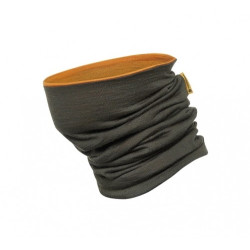
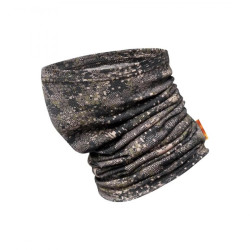
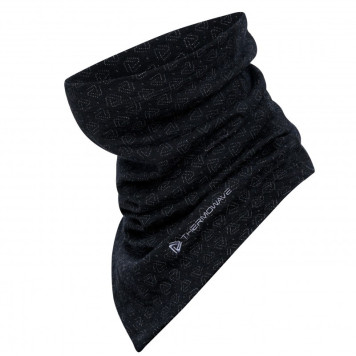
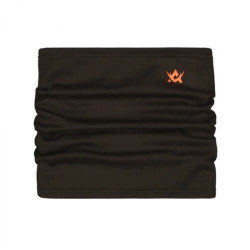
Thermowave merino gaiters, including the Chute model, a reversible forest green/orange version and a single-sided camo dazzle print, are built for cool and cold weather. Merino wool keeps warming even when damp, resists odour after days in a hunting camp and is completely silent against the skin. You notice this most when sitting in a high seat from first light to dusk: the wool never crackles, and odour control matters when the wind keeps shifting and carrying your scent across the clearing.
CoolDry and Thermodry models
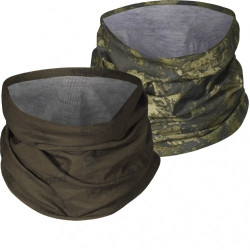
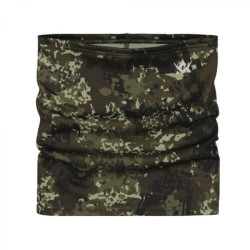
The Alaska CoolDry gaiter in moss brown and the Buff CoolDry in BTI camouflage are made of fast-drying fibre, so they suit the early season, stalking and driven hunts where you move a lot. The Thermodry line, offered in brown and in BlindTech patterns (Forest or Blaze), is warmer and aimed at late autumn. A soaked synthetic gaiter dries on your neck within the first hour, so a wade through a wet clear-cut does not send you digging for a spare.
Blaze and reversible gaiters
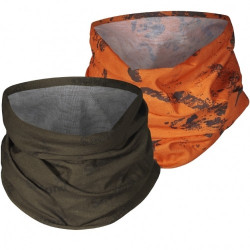
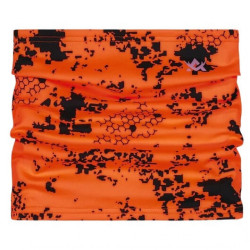
Gaiters for driven hunts carry a bright orange side or come in pairs. The Seeland Neck two-pack gives you a pine green gaiter for still hunting and an InVis orange blaze one for the driven line. The reversible Thermowave simply turns inside out, and the Chevalier Brisk scarf is also available in High Vis Orange. Blaze orange lets beaters and neighbouring guns see you clearly between the bushes, while to the eyes of hoofed game it barely stands out, so safety costs you no concealment.
Roll collars and classic scarves
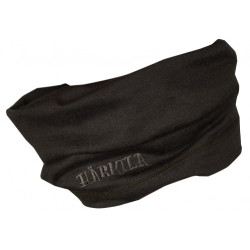
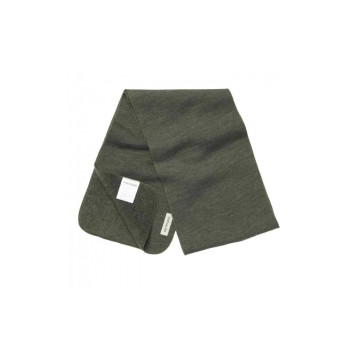
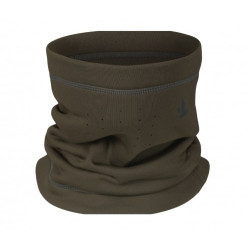
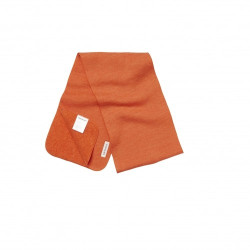
The Härkila All Season roll collar, sold in shadow brown and dark olive, works as an insulated collar under the jacket: it never twists, slides or bunches under your chin as you aim. Classic woven scarves such as the Chevalier Brisk in dark green, the Härkila Retrieve in burgundy check and the Härkila Trygve in willow green belong to the start and end of the hunting day: the drive to the line, the wait by the vehicles and the evening by the fire, where warmth and a tidy look count most.
How to choose
Choose by hunting style and season: motionless cold-weather vigils call for merino wool, active drives for light fast-drying fibre, and a place in the driven line demands a bright colour. The shade also has to match your jacket and hat, because a pale patch at the neck betrays a hunter faster than a slow movement does. Run through these points before ordering:
- Season: pick merino or Thermodry for winter and late autumn, CoolDry fibre for the warm months.
- Hunting style: still hunting rewards warmth and silence, driven hunts reward visibility and moisture transport.
- Colour: earth tones or camouflage for stalking, an orange side or a separate blaze gaiter for driven hunts.
- Shape: a gaiter is safer and more practical around a firearm, a scarf is warmer for calm days.
- Care: merino wants rare, gentle washing, synthetics shrug off frequent laundry after muddy drives.
Field advice
What a gaiter gives you depends on how you wear it: in the high seat pull it up over your nose to hide your face and pre-warm the air you breathe, and push it down while walking so you do not sweat before you even sit. A dry spare in the rucksack weighs a few dozen grams and changes a cold day completely.
Never wash merino pieces with scented detergent: a deer's nose picks up perfume from farther away than it picks up you. After a wet day dry the gaiter at room temperature rather than on a radiator and the fibre lasts longer. In winter a gaiter also earns its keep under shooting ear muffs, closing the draughty gap beneath them. If you hunt with optics, check that a high-pulled gaiter does not steer your breath onto the eyepiece, because a fogged lens at the decisive moment costs you the shot.
Brands
The category gathers established hunting clothing makers: Härkila and Seeland stand for the Danish hunting tradition, Blaser and Chevalier dress hunters who value the classic style, Thermowave is a Lithuanian merino knitwear brand, and Alaska builds functional layers for active hunting. All of these makers also produce the rest of the wardrobe, so the shades are easy to match across your outfit.
If you already wear a Härkila or Seeland jacket, a gaiter from the same colour family melts into one silhouette. Thermowave merino gaiters are neutral and pair with base layers from any brand, while Alaska pieces in BlindTech patterns carry the camouflage of the matching suit right up to your chin.
Match your gaiter with the other small pieces of your outfit: see head covers, gloves and socks. If you are unsure about the fabric or colour for your style of hunting, write to us and we will help you choose.