
Shooting Safety Glasses
Shooting safety glasses protect a hunter's eyes from ejected cases, powder particles and branches at the range and in the field. This category holds Browning, Swisseye, Sig Sauer, Winchester and Proshooter models with yellow, orange and clear lenses, including ballistic rated options.
SOLD OUT
SOLD OUT
SOLD OUT
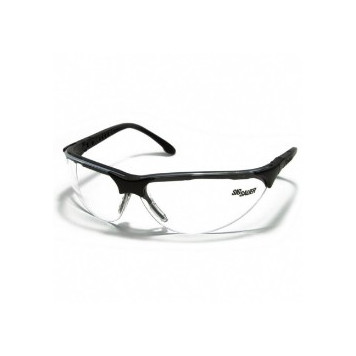
SIG SAUER
Out of stock
Shooting glasses Sig Sauer ballistic rated, adjustable - clear (8300741)
€35.00
SOLD OUT
SOLD OUT
SOLD OUT
SOLD OUT
Shooting Safety Glasses
Every shot sends something toward your face: an ejected case, unburned powder, fragments of a clay target. Push through thick cover on a driven hunt and a springing branch adds one more hazard. Shooting safety glasses cut these risks down to almost nothing, which is why ranges often require them and experienced hunters wear them by habit. Here you will find Browning, Swisseye, Sig Sauer, Winchester and Proshooter models.
Who needs shooting glasses
Shooting glasses are for anyone standing near a firing gun: hunters on the line of a driven hunt, clay shooters, and everyone practising at the range. They stop mechanical particles, wind and dust, and a well-chosen lens tint also sharpens contrast, so you pick up a clay or an animal faster. A semi-auto throws its cases sideways, so the person next to the shooter takes as much risk as the shooter. On a driven hunt, pellets can ricochet off frozen ground or a tree trunk. The glasses weigh a few dozen grams and never get in the way of the sight picture, so there are few reasons left to shoot without them.
Lens colours and what they do
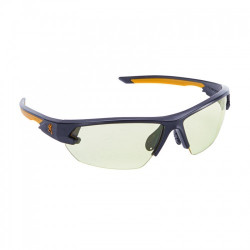
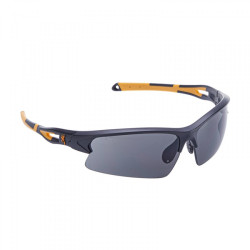
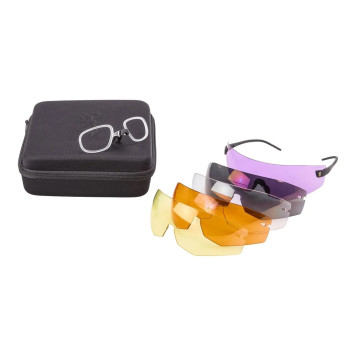
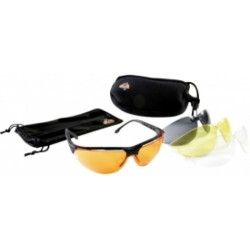
Lens colour decides how much light reaches your eye and how well the target stands out against the background. Yellow lenses brighten dull light for dusk hunting, orange lenses make clay targets pop, and clear lenses suit indoor ranges. This category covers all of these, plus an interchangeable-lens set.
Yellow lenses
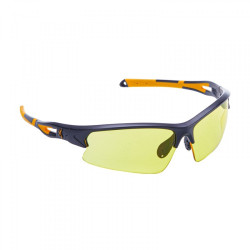
A yellow lens brightens the picture and boosts contrast when light is short: on an overcast day, at first light, or at dusk when wild boar start to move. The Proshooter Yellow and the yellow Browning On-Point are this type. They also help when you shoot clays against a grey autumn sky.
Orange lenses
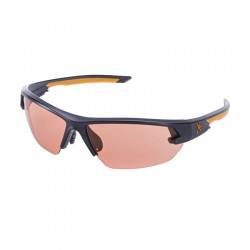
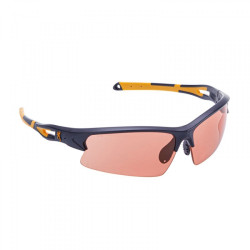
An orange lens makes orange clays stand out against green woodland or a grey sky, which is why clay shooters pick it most often. The Browning Proshooter and the orange Browning On-Point are the options here. In the field, this tint tames harsh side light on a bright day.
Clear lenses
A clear lens passes natural colours and all available light, so it works best indoors and whenever you need to judge the true shade of an animal's coat. The Sig Sauer ballistic rated glasses with a clear lens and adjustable temples are the example in this category.
Interchangeable lenses and camo frames
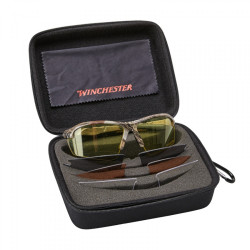
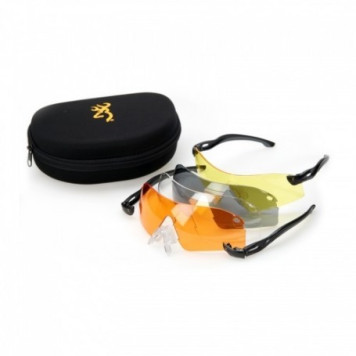
The Browning shooting glasses set lets you swap lenses to match the light, so one frame serves both the range and a dusk sit. The Winchester Eyepro Orlando comes in a Forest Camo frame that does not glint or catch an animal's eye while you wait in a high seat.
Ballistic protection and prescription wearers
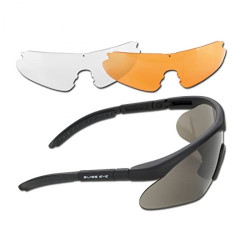
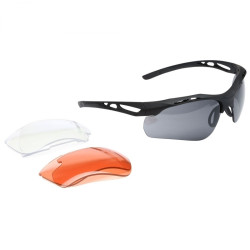
Not every pair of glasses stops a pellet or a fragment, so serious shooting calls for lenses built to a ballistic standard. The Sig Sauer model is marked ballistic rated, and the Swiss-made Swisseye Attac and Stingray are designed for shooting loads. If you wear prescription glasses, the Swisseye Stingray with an RX insert solves the problem: an optician fits your corrective lenses into the inner frame while the outer protective lens takes the impact. You no longer have to choose between seeing clearly and keeping your eyes safe.
How to choose
Before ordering, think about where and when you shoot most. That decides the lens colour, while your face shape and the rest of your gear decide the frame. Work through these points:
- Purpose: pick an orange lens for clays, yellow for dusk hunting, clear for the indoor range.
- Protection level: fragment risk calls for a ballistic lens, such as the Sig Sauer or Swisseye models.
- Fit: adjustable temples and a soft nose pad let you wear the glasses for hours without pressure points.
- Compatibility: slim temples sit well under ear muffs, and an RX insert answers the prescription question.
- Conditions: if you shoot at different times of day, an interchangeable-lens set is the practical answer.
Field care tips
Glasses last for years if you treat them like optics rather than a work tool. Clean the lens with a microfibre cloth, because a sleeve or glove leaves micro scratches that turn into a hazy patch against low sun. On a cold morning, put the glasses on before you climb into the high seat so the lens temperature settles and fogging stops. Keep them on for the whole drive during a driven hunt, since ricochets arrive exactly when you least expect them. Store the pair in a hard case next to your cartridge belt, and they will always be at hand before the first shot.
Brands in this category
Browning makes up the biggest share: the On-Point series in several lens colours, the Claymaster for clay shooting, the Shooting Competition model, and a set with interchangeable lenses. Swisseye covers the ballistic class and the RX route for prescription wearers. The Sig Sauer pair suits shooters who put impact resistance first, the Winchester Eyepro Orlando appeals to hunters with its camo frame, and the Proshooter Yellow is a light, simple choice for low light.
Pair eye protection with hearing protection from shooting ears protection, practise with throwers and throwing plates, and steady your shot with shooting rests and sticks. If you are unsure which model fits your hunting, write to us and we will advise.