
.300 WIN. MAG.
.300 Win. Mag. cartridges for hunting rifles: bonded Norma Oryx and Winchester Power Max loads, fast-expanding RWS Evolution, and lead-free Sax KJG-SR and Blaser CDC bullets. A long-range caliber for large game, with Sako, GECO and Browning also represented.
GECO
In stock
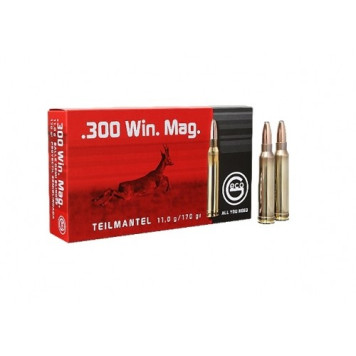
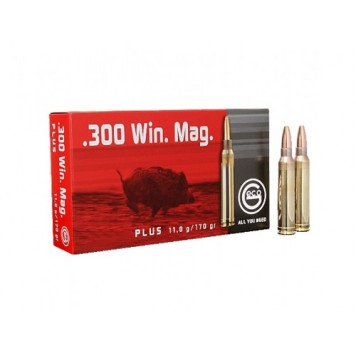
Šoviniai GECO kal. 300 Win Mag Teilmantel 11,0g./170gr 2117576
€2.75
Available in store
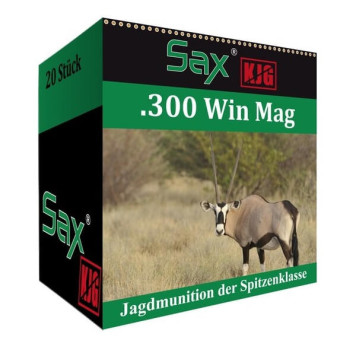
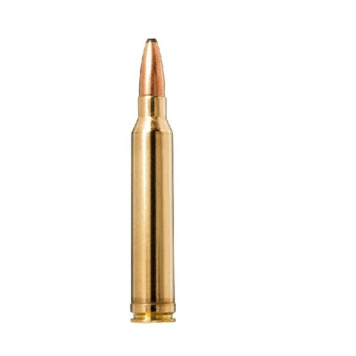
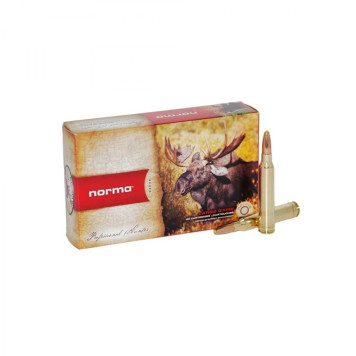
.300 WIN. MAG.
.300 Win. Mag. cartridges are for hunters who need power and accuracy at distance: a red deer feeding on open ground, a boar watched from a high seat, or a mountain hunt abroad. This category holds 24 loads from the Norma, Sako, RWS, GECO, Winchester, Browning, Blaser and Sax ranges, with bullet weights from 8.0 g lead-free monoliths to 13 g bonded loads for the heaviest game.
What the .300 Win. Mag. caliber is for
This is one of the most versatile magnum calibers for large game. .300 Winchester Magnum shoots flatter and carries more energy to a distant target than standard .30 caliber rounds, which is why hunters pick it for fields, clear-cuts and meadows where the shot often runs past two hundred meters.
Typical quarry is red deer, moose and heavy boar. Higher muzzle velocity means shorter flight time, less wind drift and a wider band of distances where you can hold dead-on. Recoil is noticeably stiffer than .308 Win. or 6.5x55, so a suppressor or a good recoil pad makes the shot and the follow-up easier. In thick forest at short range the extra power is not needed, but where one dependable shot at 250 meters decides the hunt, this caliber does its job.
Bullet types in this category
The assortment splits into four main bullet groups: bonded bullets for deep penetration, fast-expanding bullets for immediate effect, lead-free monolithic bullets, and classic soft points. Each group behaves differently inside game, so pick the type by the species you hunt, your usual shot distance and the way you hunt.
Bonded bullets
Norma Oryx (10.7 g, 11.7 g and 13 g), Winchester Power Max Bonded 180 gr and Norma Bondstrike 11.7 g have a lead core fused to the jacket. Such a bullet keeps most of its weight even after passing through shoulder bone, cuts a deep wound channel and suits moose and heavy boar.
Fast-expanding bullets
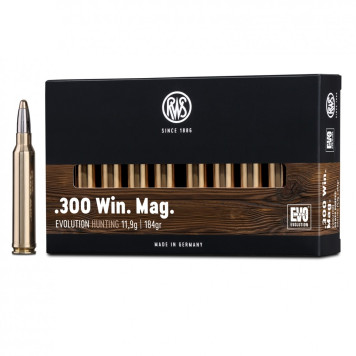
RWS Evolution (9.0 g and 11.9 g), Norma Tipstrike 11 g and Norma Vulkan 180 gr open up in the first centimeters of the wound channel and dump their energy quickly. That is the pick for driven hunts, when a boar is moving and you want it down close to where it was hit.
Lead-free bullets
Sax KJG-SR 8.0 g, Blaser CDC 10.4 g and Norma Evostrike 9.0 g are lead-free designs. The lighter copper-alloy bullets fly faster, leave less residue in the meat around the channel and suit hunters who avoid lead or hunt where it is restricted.
Soft points and long-range loads
Sako Super Hammerhead SP (9.7 g and 11.7 g) and GECO Teilmantel 11 g are proven soft-point bullets for everyday hunting. GECO Plus pairs penetration with quick expansion, and Browning BXC 185 gr is built for big game at longer distance.
Bullet weight and trajectory
Bullet weight decides velocity, drop and effect on game. Light 8.0 and 9.0 g bullets fly faster and drop less at three hundred meters, while heavy 11.7 and 13 g bullets carry more energy and stay on course through bone. A middle weight of 10.4 or 11 g is a sound compromise for most hunts in local terrain.
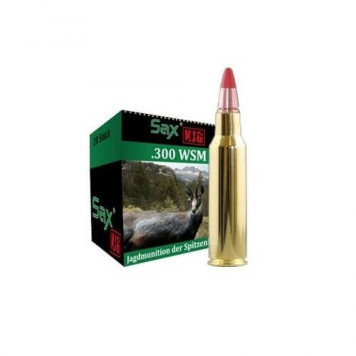
One practical warning: this category also lists a couple of .300 WSM (Winchester Short Magnum) loads, among them Norma Bondstrike and the Sax KJG-SR version for that chambering. It is a different cartridge from .300 Win. Mag., so check the caliber stamp on your barrel before ordering.
How to choose your cartridge
Four things settle the choice: your rifle's chambering, the species you hunt, your usual shot distance and the lead question. The steps below narrow the list to one or two loads, which you then test at the range in your own barrel. No table replaces that test, but it gives you a place to start.
- Check the barrel stamp first: .300 Win. Mag. and .300 WSM are not interchangeable.
- Match the species: bonded 11.7 or 13 g bullets for moose and heavy boar, lighter Evolution or Evostrike for red deer in open fields, Tipstrike or Vulkan for driven hunts.
- Match the distance: up to a hundred meters any type works, past two hundred meters sleek polymer-tip bullets gain the edge.
- If clean meat or lead restrictions matter to you, take the lead-free Sax, Blaser CDC or Evostrike.
- Buy two or three boxes of the same load, zero with it and stay with one lot: every barrel groups different cartridges differently.
Practical advice for the field
A magnum caliber forgives no sloppiness: zeroing, recoil control and a constant load matter more than raw power. Before the season, confirm your zero at a hundred meters and write down the drop at the two and three hundred meter marks, because bullets of different weight drop differently.
From a high seat, rest the fore-end on something soft, never the barrel itself. After switching loads, zero again even if the weight looks similar. In winter keep cartridges dry: moisture and temperature swings hurt primers. After a driven hunt, check the rounds left in your magazine for deformed tips, above all the polymer ones.
Brands
Most of the ammunition here comes from Scandinavia and Germany. Swedish Norma offers the widest range, from Oryx to Tipstrike, Finnish Sako is known for its Hammerhead line, German RWS and GECO balance quality with price, and Winchester with Browning stand for the American magnum tradition. Sax specializes in lead-free bullets, and Blaser CDC was developed for that maker's rifles but fits any .300 Win. Mag. barrel.
If you shoot other calibers too, see our .243 Win. cartridges, 6.5x55 cartridges, .223 Rem. cartridges and .222 Rem. cartridges. If you are unsure about bullet type or weight for your rifle, write to us and we will advise you.