
-€704.00
Thermal monoculars
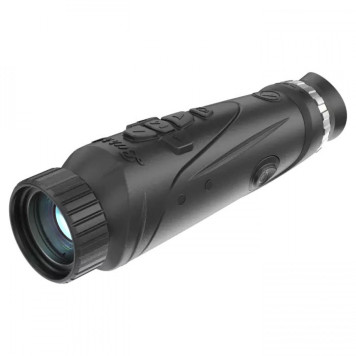
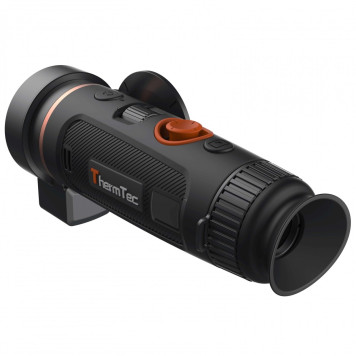
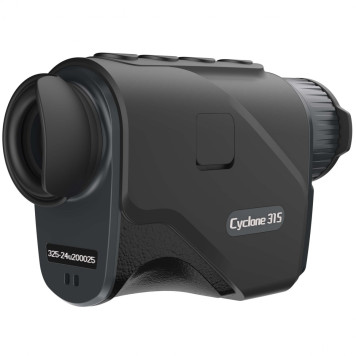
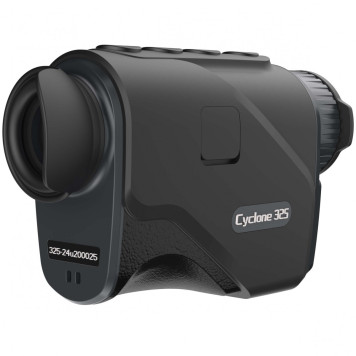
Thermal monoculars help you spot game in the dark and in low visibility before a hunt, scanning a field or forest edge fast from a high seat or on the move. The range includes Pulsar, InfiRay, Thermtec, Steiner, Burris and Liemke models, from compact to long-range.
-€100.00
-€281.00
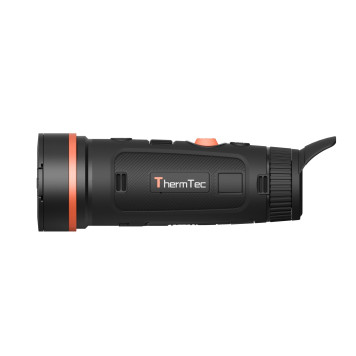
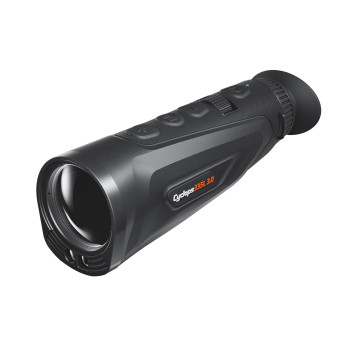
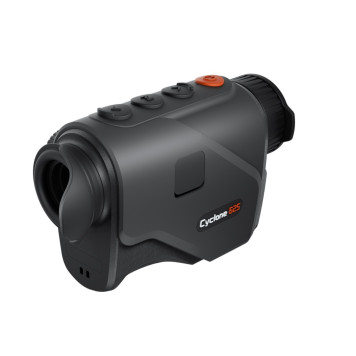
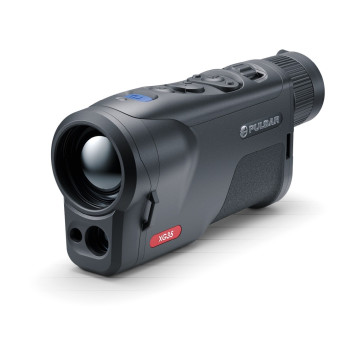
Thermal monoculars
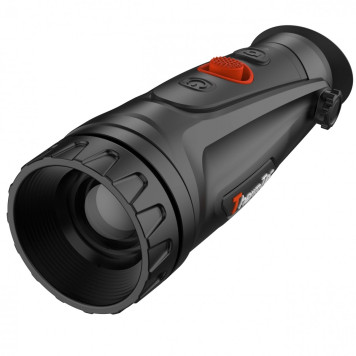
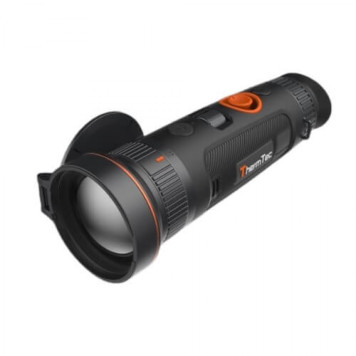
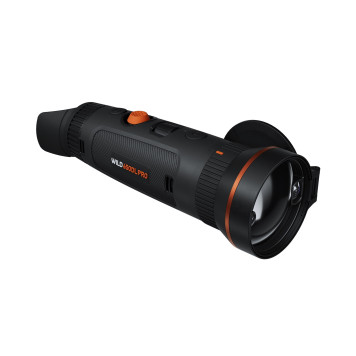
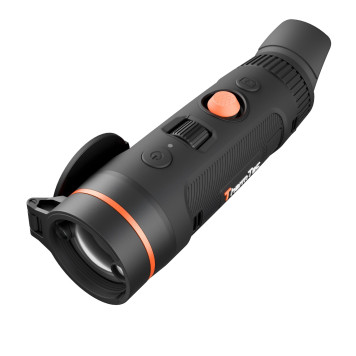
A thermal monocular is a single-eye thermal imaging device that shows an animal's body heat in the dark, in fog or in thick brush, where ordinary binoculars show nothing. A hunter scans a field, meadow or forest edge before stalking or before a driven hunt, and knows in advance where the animals are. This category holds 37 models, from pocket-sized units to long-range devices with a built-in rangefinder.
Why a hunter needs a thermal monocular
A monocular is the step before the shot, it helps you find the animal, not shoot it. It lets you scan a large area from a high seat or a car and spot a wild boar in the field before it senses you. At night, in dusk or fog your eyes see nothing, while the thermal sensor picks up the temperature difference between the animal and its surroundings and shows a clear outline on the screen.
Unlike thermal scopes, a monocular is built for observation, not for aiming. That matters in Lithuania, where using thermal observation devices in hunting grounds is permitted, while thermal scopes used for shooting are subject to separate restrictions. Most hunters keep a monocular as their main observation tool and choose a scope separately only if their hunting method allows it.
Types of monoculars in the range
The range splits by size, sensor resolution and extra features. Each type suits a different hunting situation, from a quick check of a field to long observation from a high seat or along a driven-hunt line.
Compact pocket models
The Pulsar Axion XM30F and InfiRay FINDER FH35R V2 are small, light units that fit easily in a pocket or on a belt through a long day of walking. They suit a quick check of a field or meadow before you climb into a high seat or move to a new spot.
Models with a built-in rangefinder
The Pulsar Axion 2 LRF XG35, Pulsar Axion 2 LRF XQ35 PRO, Pulsar Telos LRF XP50, Thermtec Wild 335 LRF, Thermtec Wild 635 LRF and Thermtec Wild 650 LRF carry a built-in laser rangefinder. It shows the distance to a spotted animal instantly, so along a driven-hunt line or across a large field you know at once whether the animal is within shooting range.
Long-range observation devices
The Pulsar Telos LRF XP50, InfiRay UNIQUE UH50 and Thermtec Wild 650 are built for long distances, useful when you need to scan a wide field or forest edge from far off, for example watching crops for boar damage or covering a large area during a driven hunt.
Compact entry-level models
The Steiner Nighthunter H35 Lite, Burris BTH35 V2, Liemke Challenger-15 and Thermtec Wild 325 are simpler, lower-priced devices, suited to a hunter who is just starting out with thermal imaging and wants a reliable basic tool without extra features.
How to choose a thermal monocular
Choosing the right model depends on your hunting method and the distance you observe most often. Consider the following points.
- Think about the distance you observe most, a close field or a far forest edge.
- Decide whether you need a rangefinder, useful in driven hunts and large open areas.
- Check the weight and size if you will carry it all day on a belt or in a pocket.
- Look at battery life, on a long night hunt this can matter more than any other spec.
- Compare sensor resolution against your budget, a higher resolution gives a clearer image at distance.
Field advice
Batteries drain faster in the cold, so for winter hunts it is worth keeping a spare battery in a warm pocket. In damp weather or fog thermal image is often clearer than regular optics, since visibility does not depend on light, but rain on the lens can blur the picture, so a cloth is useful to carry. During a driven hunt a monocular helps you check quickly whether an animal is hiding in the brush before the beaters move, and while stalking from a high seat you can sweep the field edges periodically without making noise. In summer the clearest picture usually comes early morning or late evening, when the temperature gap between an animal and its surroundings is largest. In winter a cold background lets you spot an animal clearly at almost any hour, but keeping the battery warm becomes the main concern.
Monocular or binoculars, which fits your hunt
A monocular is used with one hand and is lighter, so it is easy to carry alongside daytime binoculars and use only for a quick check when you need to tell a shadow from an animal. Binoculars need both hands, but over long observation from a high seat they tire the eyes less, since the image is seen with both eyes. If you already carry regular hunting binoculars for daytime and want an extra device for the dark hours, a monocular is the logical choice, since it stays small and does not clutter your neck.
For hunters who spend long stretches watching one spot, for example near a feeding site or the edge of a large field, thermal binoculars in the neighbouring category can suit better. When moving through the forest, changing observation points or taking part in a driven hunt, a compact monocular usually stays more practical, since it can be raised to the eye and lowered again quickly.
Screen and sensor specs worth checking
Screen resolution and sensor sensitivity decide how clearly you see an animal's outline at distance, not just a bright spot. Higher-end models such as the InfiRay FINDER FH50R V2 or Pulsar Telos LRF XP50 suit hunters who need to identify an animal from far off, for example telling a boar from a roe deer across a large field. Simpler models such as the Thermtec Wild 325 or Liemke Challenger-15 work well for closer observation and for a first introduction to thermal imaging, when maximum range is not the main priority.
Brands
The range includes Pulsar, InfiRay, Thermtec, Steiner, Burris and Liemke. Pulsar and InfiRay offer the widest model line, from compact units to long-range devices with a built-in rangefinder, Thermtec covers both entry-level and LRF models, while Steiner, Burris and Liemke round out the range with simpler, reliable tools. Before buying, think about accessories too, a wrist strap, spare battery or belt holster extends how long you can use the device outdoors and protects it from a fall while crossing a ditch or pushing through thick brush.
Related accessories are in the thermal device accessories category, and if you are looking for a different device format, check thermal binoculars or thermal scopes. If you are not sure which model fits your hunting style, write to us and we will gladly advise.