
Thermal binoculars
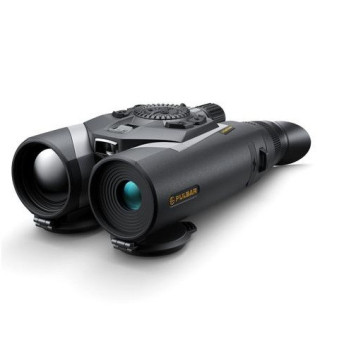
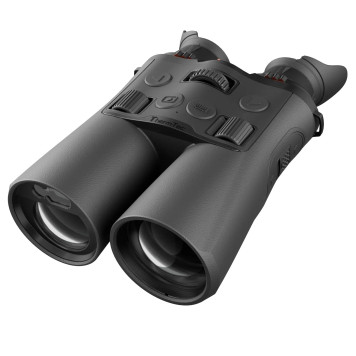
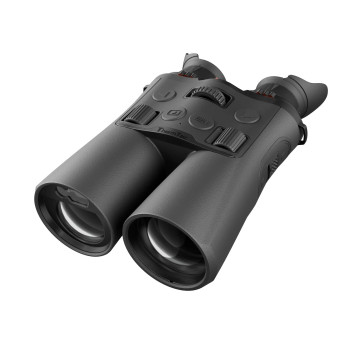
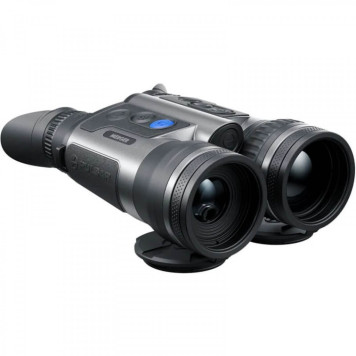
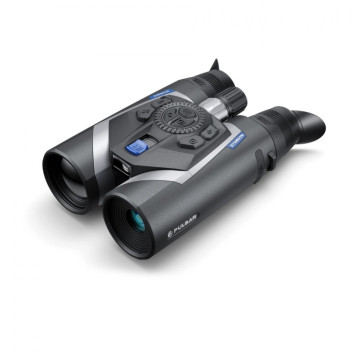
Thermal binoculars for hunters who scout and track after dark. The range includes Pulsar Merger, Pulsar Symbion and ThermTec Ventus models, with laser rangefinders and dual-channel viewing built in.
SOLD OUT
SOLD OUT
SOLD OUT
Thermal binoculars
Thermal binoculars show you an animal by the heat it gives off, not by available light. That means when you are watching a field from a high seat, waiting near a bait site, or holding a line on a driven hunt, you spot the animal before it spots you. This category holds Pulsar and ThermTec binoculars, both built around sensors that turn heat differences into a viewable image through the eyepieces.
Who are thermal binoculars for
They suit a hunter who needs to scan a wide field or treeline and locate an animal before deciding on the next move, whether that is closing distance, aiming or signalling the rest of the party. Two eyepieces let you watch for long stretches without straining one eye, which matters during a night watch over a crop field or a night boar hunt. Unlike a scope, binoculars are not mounted on a rifle, so you scan freely with the weapon still slung.
Which models are available
The range combines classic thermal binoculars with multispectral models that add an optical channel. Each type suits a different hunting situation.
Pulsar Merger LRF
The Merger LRF XP50 and XT50 have a built-in laser rangefinder that shows the distance to the animal without a separate rangefinder. That helps you judge whether a shot is realistic or the animal is still too far off.
Pulsar Symbion LRF
The Symbion DXT50 and DXR50 are dual-channel binoculars combining a thermal channel with a digital night-vision channel. You switch between modes depending on the light and the situation in the field.
ThermTec Ventus
The Ventus 635L and 650L are multispectral binoculars that combine thermal and optical imaging in one unit. That is useful when you want to detect an animal by heat first, then confirm its identity with a normal image.
How to choose the right model
A few points worth weighing before you pick a model:
- Whether a built-in rangefinder for judging distance to the animal matters to you
- The typical distance at which you scan fields or forest edges
- Whether you hold one position for long stretches or move and scan different directions
- Whether an added optical channel alongside the thermal one is worth having
- How long the unit needs to run without recharging during a night watch
Practical field advice
When watching from a high seat at night, brace the binoculars rather than holding them free, since unsupported hands tire fast over a long watch. Scan the field slowly in bands rather than sweeping the whole width at once, which makes a bedded or standing animal easier to catch among the vegetation. Before a driven hunt, check the battery charge, since cold weather drains it faster. Wipe dew or moisture off the lens gently so you do not damage the coating.
Care and storage between hunts
After a damp or rainy night, let the binoculars dry out at room temperature before you zip them into the case, so condensation does not form inside the housing. Clean the lens only with a clean microfibre cloth, never a paper tissue or a cloth carrying grit, which scratches the coating. In winter, when the unit sits unused, store the battery separately in a warmer place, since a cold battery loses capacity faster over time. Keep the case in a dry spot rather than a car boot, where overnight temperature swings are at their widest.
Common mistakes with thermal binoculars
The most common mistake is switching the unit on only after reaching the high seat, rather than earlier while still walking the field or forest edge. The sensor needs a couple of minutes to settle, so the first frames after power-on look softer. Another mistake is watching through glass or film, for example through a car window, which distorts the heat image and shortens detection range. It also pays to avoid sudden temperature swings: bringing the unit from cold air into a warm room fogs the lens, and it then needs to dry out again before the next watch.
Brands represented
This category carries Pulsar and ThermTec, both widely used by European hunters and known for sensor quality and reliable performance in field conditions.
For a related device, see thermal monoculars, thermal scopes or thermal device accessories. If you are not sure which model suits your style of hunting, write to us and we will help you decide.