
Ballistic Weather Meter
Ballistic calculators and weather meters give you a precise firing solution at long range: Kestrel units measure wind, temperature and pressure, while Labradar and MagnetoSpeed chronographs show the true velocity of your load. Mounts, cases and calibration accessories complete the category.
-€30.00
-€459.00
SOLD OUT
SOLD OUT
SOLD OUT
SOLD OUT
Ballistic Weather Meter
A long shot in the field is decided before you touch the trigger. Wind speed, air temperature, pressure and the true velocity of your load determine where the bullet lands at 300 or 500 metres. This category collects the tools that turn those numbers into a firing solution: Kestrel ballistic weather meters, compact ballistic calculators, Labradar and MagnetoSpeed chronographs, and the mounts, cases and calibration accessories that keep them working in the field.
Why a hunter needs a ballistic weather meter
A ballistic calculator works out how far your bullet drops and how far the wind pushes it in the exact conditions around you, then gives you a correction in clicks, MOA or MIL. For a hunter that means one thing: the first shot lands where it should and the animal is not left wounded. On the range you can fire a string and walk your hits onto the target; on a mountain slope or across a stubble field you rarely get a second chance. Distances past 300 metres, air that differs from the day you zeroed, and a crosswind you can only guess at all add up. A meter that reads the environment on the spot removes the guesswork.
Types of equipment in this category
The category holds four groups of devices that build on each other: full weather meters with a built-in ballistic solver, simpler wind and weather meters, compact ballistic accessories, and chronographs that measure bullet velocity. Mounts and cases round out the selection and protect the instruments in rough terrain.
Weather meters with a ballistic solver
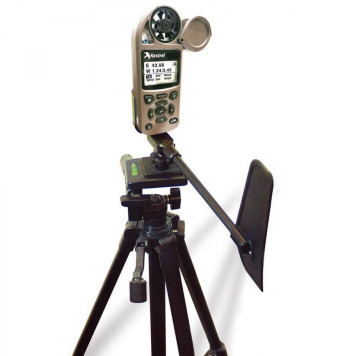
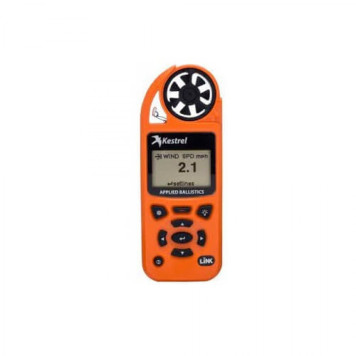
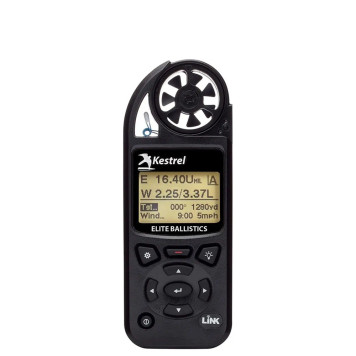
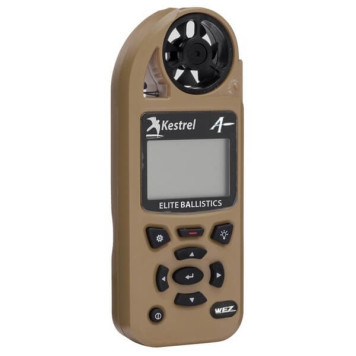
The Kestrel 5700 series is the backbone of the category. Kestrel 5700 Elite models run the Applied Ballistics solver and come in several housing colours, including black, orange and green. The Kestrel 5700X Elite is the updated version with LiNK connectivity, and the 5700X WEZ goes a step further by estimating your hit probability on a target of a chosen size. The Kestrel 5500 with a vane mount suits shooters who mainly need accurate wind and atmospheric data.
Simpler wind and weather meters
The Kestrel 2700 measures wind, temperature and pressure at a lower price, which makes it a sensible first meter for a hunter who runs his ballistic maths in a phone app. The Kestrel 3500NV has a backlight designed for work in the dark, so it will not ruin your eyes while you wait over a bait site after sunset.
Compact ballistic accessories
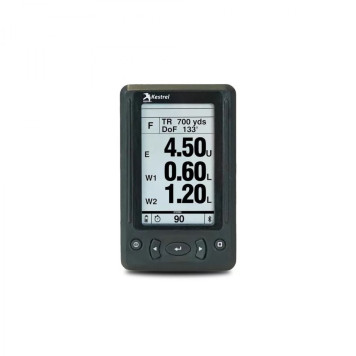
The Kestrel DROP D3 is a small sensor that logs environmental data and feeds it to a ballistic app, so you can clip it to your pack and forget about it for the day. The Kestrel HUD Heads Up Display puts the firing solution next to your scope, which keeps your eyes on the animal instead of on a screen in your hand.
Chronographs
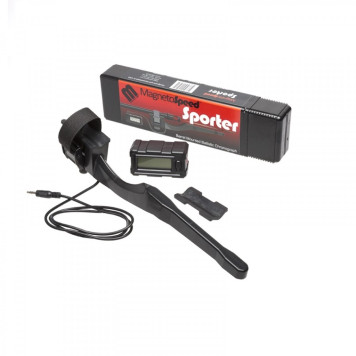
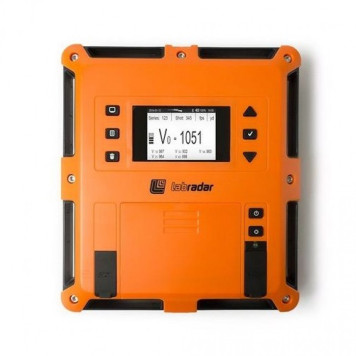
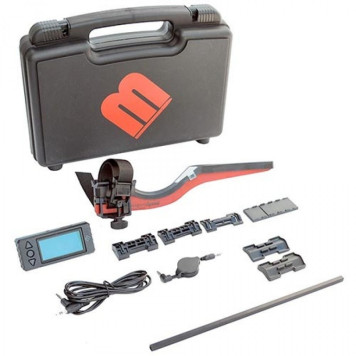
A ballistic solver is only as good as the muzzle velocity you feed it, and the real figure almost always differs from the one printed on the ammunition box. The Labradar measures velocity with Doppler radar and attaches nothing to your rifle. The MagnetoSpeed Sporter and MagnetoSpeed V3 clamp onto the barrel and work in any light; the V3 ships in a hard case.
Mounts, cases and spares
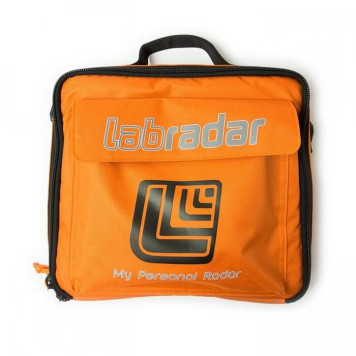
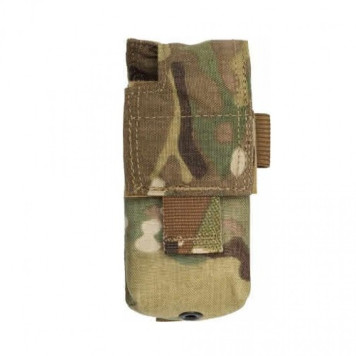
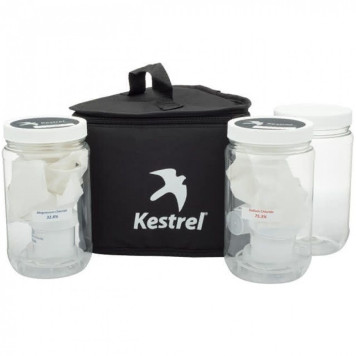
The Kestrel 0799 tripod mount and the rotating Mount&Carry and Mount&Molle holders let the meter stand with its impeller into the wind while both your hands stay on the rifle. The Tactical Molle carry case keeps the unit on your vest, a dedicated Labradar case protects the radar in your pack, and the RH calibration kit and replacement impeller keep readings honest after years of field use.
How to choose the right unit
Your choice depends on the distances you shoot and on how much of the work you want the device to do. Go through these points in order:
- Judge your distances. Inside 200 metres in forest cover a well-zeroed rifle is enough; a solver starts earning its keep from about 300 metres out.
- Decide where the maths happens. If a phone app does your calculations, the data from a Kestrel 2700 or 3500NV is enough; if you want everything in one device, pick the 5700 series.
- Measure your true velocity. A Labradar or MagnetoSpeed chronograph is the first purchase for serious long-range work, because without a real velocity even the best solver computes from bad input.
- Think about carrying. A Molle case or a rotating mount proves its worth in the field far more than it seems at the counter.
- Check connectivity. LiNK models talk to the HUD display and your phone, so data moves without manual retyping.
Practical advice for the field
The instrument only gives honest numbers when you use it correctly. Read the wind in the open, at your own position, not from behind a tree or a vehicle, and watch what the wind does along the whole bullet path, because it can blow differently at the target. Chronograph every new lot of ammunition: lots vary even from the same maker, and velocity falls with winter temperatures. Check the impeller with the calibration kit from time to time, above all after a drop or a dusty season. Write down your confirmed hits at different distances; verified field data beats a theoretical table every time.
Kestrel, Labradar and MagnetoSpeed
The category carries three manufacturers, each covering its own ground. Kestrel weather meters are used in competitive shooting and by military units, and the 5700 series with Applied Ballistics is treated as the long-range standard. Labradar brought Doppler radar measurement to civilian shooters, with nothing clamped to the rifle. MagnetoSpeed took the opposite route: a barrel-mounted sensor that works at dusk and on indoor ranges, where radar and optical chronographs struggle. All of it is equipment built for outdoor work that takes rain, dust and cold in stride.
For long-range work you will also want a stable rest from shooting rests and sticks, and for range sessions pick up shooting ear protection and shooting safety glasses. If you are unsure which Kestrel model fits your distances and calibre, write to us and we will help you choose.