
SOLD OUT
Rubber Boots
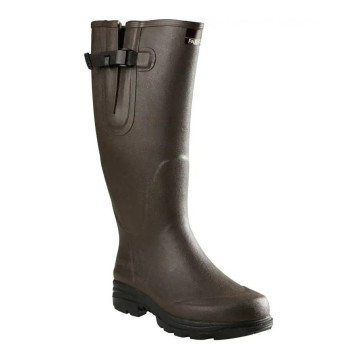
Men's rubber boots for hunting: neoprene-lined AIGLE Parcours and PARFORCE wellingtons, insulated Polyver and DEMAR winter boots, plus SEELAND, HARKILA, CHIRUCA and ISM models for wet forest, marshland and long hours on the high seat.
SOLD OUT
SOLD OUT
SOLD OUT
Rubber Boots
A soaked meadow before first light, a clear-cut after two days of rain, the edge of a marsh on the way to a duck flight pond. Leather boots give up within an hour in that terrain, while rubber boots keep you dry all day. This category holds men's rubber and neoprene wellingtons for hunting: from light AIGLE Parcours models built for stalking to insulated Polyver and DEMAR winter boots for standing still on a driven hunt.
When a hunter needs rubber boots
Rubber boots belong wherever water is the rule, not the exception: marshes, flooded meadows, drainage ditches, wet autumn forest and the spring thaw. They are fully waterproof along the whole shaft, so you can wade calf-deep and stay dry, which no membrane boot can promise. There is a second reason hunters reach for them: rubber barely absorbs or releases scent. Leather footwear soaks up sweat and dressing over the years, while a rubber shaft can be rinsed clean with water, leaving less of your track for game to find. That is why many hunters walk to the high seat in rubber boots even on a dry evening.
Types of boots in this category
The range falls into four practical groups: neoprene-lined wellingtons for most of the season, winter boots with a removable liner, zip-entry models for quick dressing in the dark, and lower-cut boots for short outings. They differ in warmth, weight and shaft construction, so it pays to know what each group does best.
Neoprene-lined wellingtons
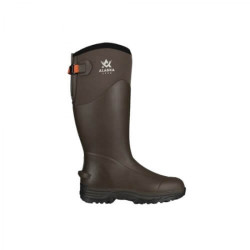
AIGLE Parcours 2 Iso, the PARFORCE neoprene models and SEELAND Key-Point are rubber boots with a neoprene lining. Neoprene keeps its warmth even when damp, so these boots work from early autumn into the start of winter. The AIGLE Parcours series adds an anatomic footbed and a shock-absorbing build, which lets you cover real distance while stalking instead of only standing at a peg.
Winter boots with a removable liner
Polyver Premium+ and Classic together with DEMAR Yetti, Caribou Pro and New Trayk-s Fur are built for cold. Their light polyurethane or EVA shells with a warm removable liner weigh little and hold heat better than plain rubber. This is the choice for driven hunts and December sits, when you stand in the line for hours without moving. Pull the liner out in the evening, dry it separately, and the boots are ready again at dawn.
Zip-entry boots
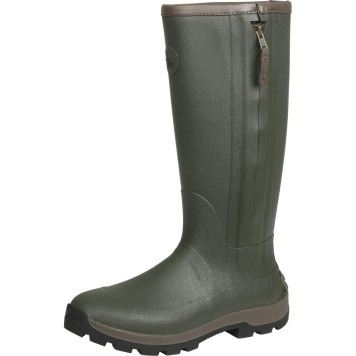
HARKILA Orton Zip and AIGLE Parcours 2 Iso Open have a full-length zip in the shaft. They go on easily over thick trousers or with a warm liner, and the closable top stops snow falling inside. That matters when you change by the car in the dark, or when a wider calf makes a stiff shaft a struggle.
Lower-cut boots for short outings
Polyver Premium+ Low is the shorter-shaft option: a boot you slip on to check a feeding site, read tracks around the yard or do a quick job in the hunting grounds. Where you do not need to wade, the low shaft gives the ankle more freedom and the foot stays cooler.
How to choose rubber hunting boots
Start by naming your style of hunting honestly: a stalker who walks all day and a hunter who sits motionless for hours need different boots. Then work through season, shaft height and sizing. A practical order looks like this:
- Season and temperature. Autumn and spring call for neoprene-lined boots; winter and long static waits call for Polyver or DEMAR with a liner.
- Hunting style. Pick lighter models with an anatomic footbed for stalking; for the high seat, warmth beats weight every time.
- Shaft height. Marsh and shallow crossings need a full-height shaft; drier ground and yard work are fine with a low one.
- Size with room to spare. Try boots on with the socks you will hunt in. A tight boot squeezes circulation and the foot freezes sooner.
- Shaft width. If you tuck in thick trousers or have a wider calf, look at zip-entry or adjustable-top models.
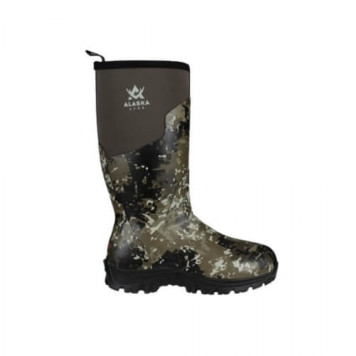
Colour comes last but is not random: every model here is green, olive or brown, so nothing about your feet gives you away on the high seat or in the beaters' line.
Field care and practical advice
Rubber boots last for many seasons if you rinse them after each hunt and dry them away from radiators. Direct heat and sunlight age rubber, opening micro-cracks that later let water through. Dry removable liners separately. Store neoprene boots standing upright, not folded, because the lining wears through at a creased point. Before a still hunt, rinse the boots with plain water and no perfumed cleaner: rubber itself carries no scent, but mud and fuel residue on the shaft do. In winter, take a spare liner or thicker socks to the high seat, since a motionless foot chills within a couple of hours even in a good boot. One more detail from the field: before climbing a tall ladder seat, check that the tread is not packed with clay, because a slick rung under a rubber sole is the most common cause of a fall.
Brands
Eight makers are represented here, each with its own strength. AIGLE builds handmade natural-rubber boots in France, and the Parcours line is a benchmark for hunters who walk far. Polyver and DEMAR specialise in light, warm winter boots with liners. HARKILA and SEELAND are Scandinavian hunting-clothing houses whose boots match the rest of a hunter's kit. CHIRUCA represents the Spanish school, while ISM Albatros and the PARFORCE neoprene models offer solid quality at a fair price for a beginner or an occasional wetland hunter.
If you need leather or membrane footwear for rougher, drier terrain, see the hunting boots category. Not sure which model suits your season and style of hunting? Write to us and we will advise from experience.