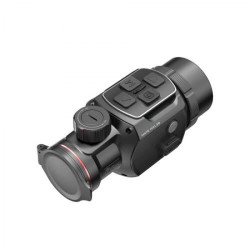
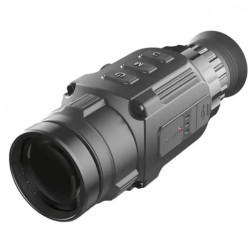
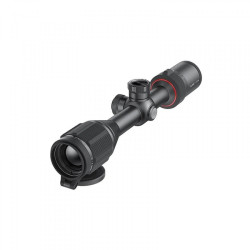
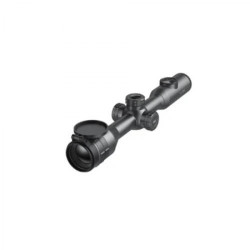
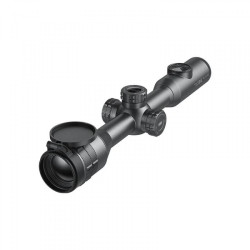
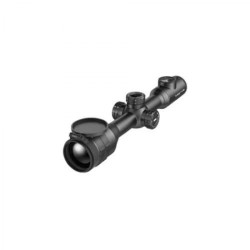
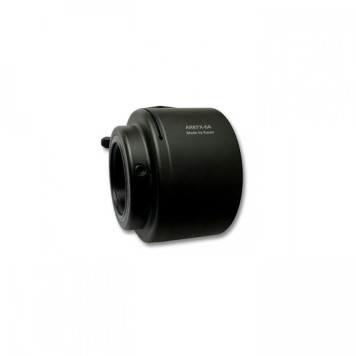
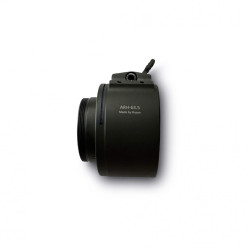
Thermal imaging devices let a hunter spot game in complete darkness, fog or thick cover, where regular optics stop working. This category brings together every thermal solution, from monoculars to scopes, along with the accessories that keep them running. Right now it holds a Pulsar APS 5 battery charger, a rechargeable Pulsar APS 5 battery and a single-point neck strap that support a thermal device through a long sit in a high seat or a night hunt.
What thermal imaging devices are used for in hunting
A thermal device reads the heat an animal gives off, so you see it in full darkness, dense forest or fog, conditions where night vision or plain binoculars no longer help. Hunters use them on driven hunts for wild boar, while waiting in a high seat, and when tracking movement across a field before sunrise.
Types of thermal imaging devices
The category covers several device types, each suited to a different job in a hunter's kit. Some are built for scouting the ground, others mount straight onto the rifle.
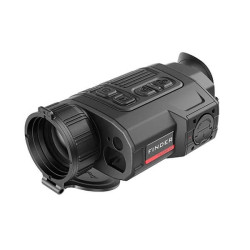
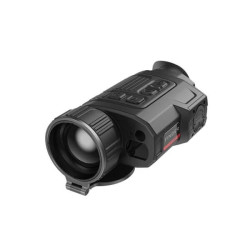
Thermal monoculars
Compact, held in one hand, a monocular is built for scanning a field edge before you settle in to wait or move along a driven hunt line.
Thermal binoculars
Watching with both eyes tires you less over a long sit in a high seat, so binoculars suit a hunter who scans the same ground for hours without moving.
Thermal scopes
Mounted on the rifle, a thermal scope lets you aim straight through the reticle, seeing the animal without a separate spotting device. Used for night hunting where local rules allow it.
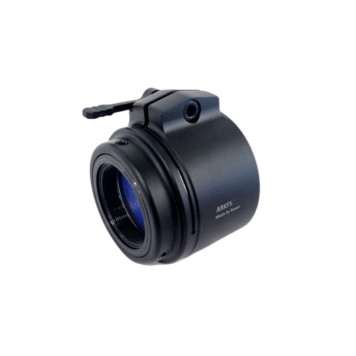
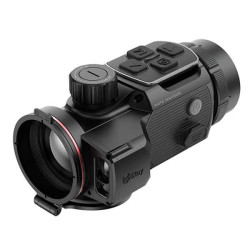
Thermal clip-on units
Fitted in front of a standard day scope, a clip-on turns it thermal at night without disturbing the zero, a practical option when the rifle already carries a zeroed day scope.
Thermal device accessories
Batteries, chargers and straps that a device cannot run without for long in the field. This is the group the current Pulsar products in this category belong to.
How to choose a thermal imaging device
The right choice depends on how you plan to use it and how long you will be out without a chance to recharge. Before buying, weigh a few points:
- purpose – scouting the ground before the hunt or aiming on the rifle,
- runtime on a single battery, especially for a long sit,
- weight and size, if you will carry it in hand or around your neck,
- mounting method on the rifle or on a strap,
- availability of extra accessories such as a spare battery or a charger.
Batteries, chargers and straps in the field
A thermal device with a flat battery in the middle of the night is dead weight, so a spare battery and a charger are worth sorting out before you leave, not at the tree line. The Pulsar APS 5 battery fits many Pulsar thermal models, and the compact charger lets you top it up before heading into the forest.
The single-point Pulsar neck strap keeps the device close to your body, leaving your hands free to move through cover or raise the rifle to aim. Nothing rattles, and you stay quiet moving toward a high seat before dawn.
Pulsar thermal solutions
Pulsar is one of the best-known names in thermal technology, used widely by hunters across Lithuania. This category currently holds Pulsar accessories, while the monoculars, binoculars, scopes and clip-on units themselves are sorted by type in the subcategories below.
Related categories: thermal monoculars, thermal scopes, thermal device accessories and night vision devices. Not sure which device fits your style of hunting? Write to us and we will help you choose.