
SOLD OUT
Scope mounts
Scope mounts connect your optic to the rifle rail with a rigid, repeatable fit. This range covers rings, bases, monoblocks and Picatinny or Weaver systems from Recknagel, Spuhr, Blaser, Sig Sauer and other brands.
SOLD OUT
SOLD OUT
SOLD OUT
SOLD OUT
SOLD OUT
SOLD OUT
SOLD OUT
SOLD OUT
SOLD OUT
SOLD OUT
SOLD OUT
SIG SAUER
Out of stock
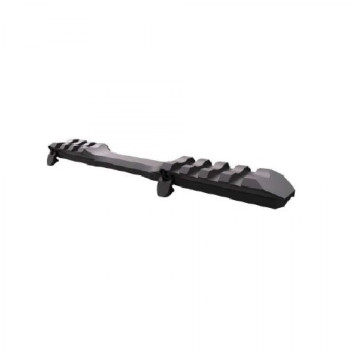
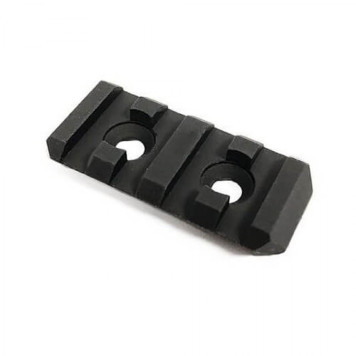
Sight rail Sig Sauer picatinny M400 tread, MLOK (KIT-TRD-SIGHT-RAIL)
€39.00
Notify me
Scope mounts
When a scope shifts on the rail by half a millimeter, the shot goes wide, and that usually happens not at the range but while dragging a rifle through brush, hauling it into a high seat, or loading it into a car after a driven hunt. Scope mounts are the link between the optic tube and the rifle rail or receiver: rings, bases, monoblocks and various quick-release systems. What they determine is whether the scope holds zero after ten shots, after a knock in the mud, or after a long ride down a forest track.
Who scope mounts are for
Mounts are for anyone attaching optics to a hunting or sporting rifle, from a still hunter waiting in a high seat to a driven hunt where a reflex sight has to react fast. They fix the optic to the rifle so the optical axis lines up with the bore and stays that way through temperature swings, moisture and mechanical shock. Without a proper mount even the best scope becomes unreliable: point of aim drifts after every knock, and in the field that means a missed chance or, worse, an inaccurate shot at the animal.
Types of mounts
The range covers four main groups, differing in how they attach and in how often the optic is meant to come off and go back on. The right choice depends on the rifle model, the scope size, and whether you plan to move the optic between several guns.
Rings
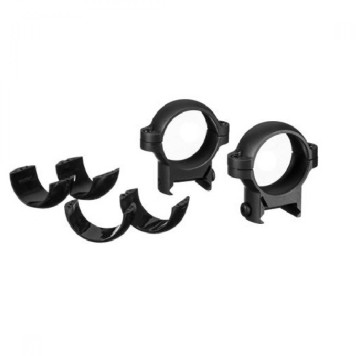
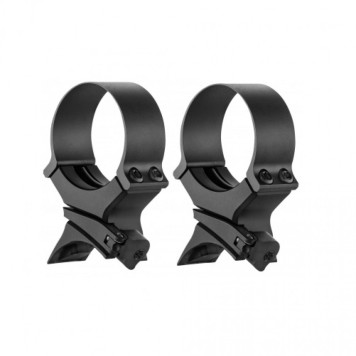
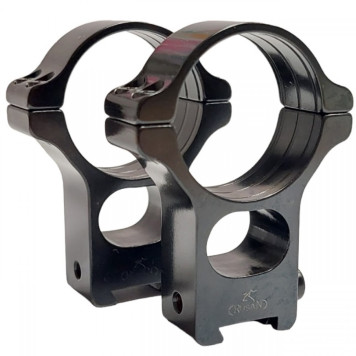
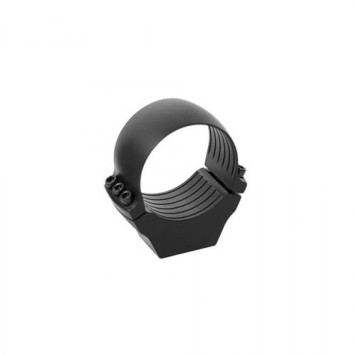
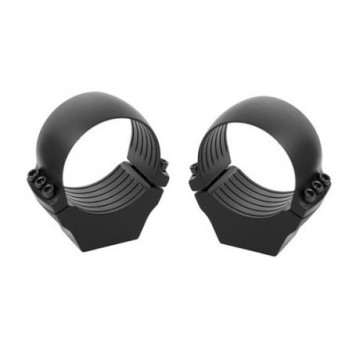
Rings clamp around the scope tube and attach to an existing base or rail. Stock includes 30 mm, 34 mm and 40 mm diameters, such as the Recknagel 30 mm 57030-0951 or the Blaser R8 40 mm sized for larger objective scopes. Rings come in different heights, so you need to know your scope's objective diameter and rail profile before buying. Rings set too low will not let the bolt handle clear or will pinch the barrel against the scope body, while rings set too high hurt cheek weld.
Bases
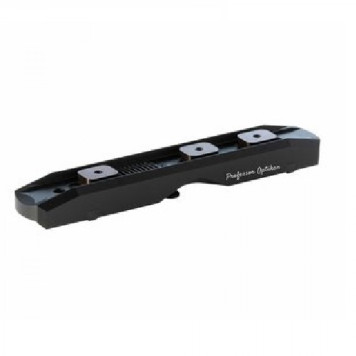
A base bolts straight onto the rifle receiver, and rings go on top of it afterward. Some bases are made for one specific rifle model, such as the Recknagel FN-Brown X-Bolt short or long version with 20 MOA tilt for longer-range shots, or the Voere LBW base. Others, like the KOZ Base Weaver two-piece, are more universal and fit several rifle types with a Weaver rail. A model-specific base always seats more precisely than a universal one, since the bolt positions are known from the factory.
Monoblocks
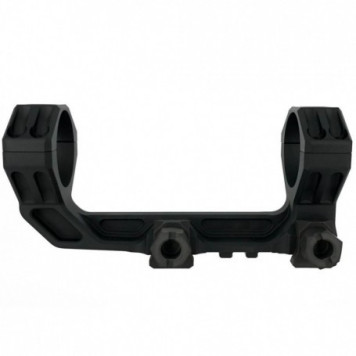
A monoblock combines base and rings into one solid piece that goes on in a single step, with no separate fitting between parts. A solution like the Walther monoblock with rings cuts the chance of alignment error and suits a scope that stays on one rifle permanently, with no plans to move it.
Picatinny and quick-release systems
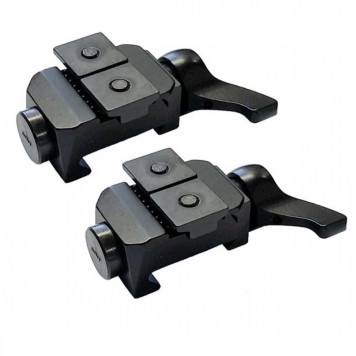
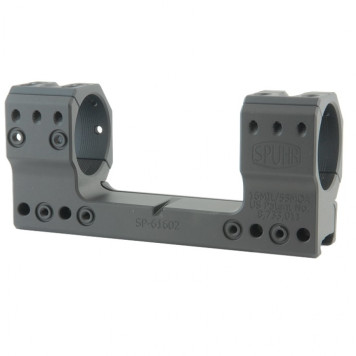
A Picatinny rail lets you move a scope between several rifles or pull it off fast for transport in a car or through dense brush. Spuhr O30 and O34 series mounts, such as the Hunting or Aesthetic models, work with this system and are often paired with the ISMS quick-release lever, letting you pull the optic off in seconds and put it back without re-zeroing. Reflex sight mounts work on a similar principle, such as the DELTA MiniDot 22 mm Weaver, built for fast target acquisition on a driven hunt.
Diameter, height and material
Wrong diameter is the most common mistake when buying a mount separately from the scope: a ring built for a 30 mm tube will not fit a 34 mm scope. Most mounts are made from aluminum or steel alloy. Steel mounts weigh more but hold up better against the recoil of heavier calibers, while aluminum keeps overall rifle weight down, which matters on a long day carrying a gun through the woods. Height is chosen against the scope's objective diameter and the receiver or barrel profile: a low mount usually gives a tighter cheek weld, but it does not suit every rifle.
MOA tilt for long range
An MOA marking on a base states how many minutes of angle the mount is pre-tilted downward, leaving more elevation adjustment on the scope for a long shot. Recknagel FN-Brown bases marked 20 MOA are built for shooters aiming at longer distances, who need more vertical correction than a standard 0 MOA base allows. For a short or medium shot from a high seat, a standard, untilted base is usually enough.
How to choose the right mount
Before picking a mount, work through six points that decide whether it will survive a season outdoors and hold zero after every shot or knock.
- The scope's objective tube diameter, usually 30 mm, sometimes 34 mm or 40 mm.
- The rifle's rail type, factory base, Weaver or Picatinny.
- Whether you need MOA tilt for long range, or a standard flat mount is enough.
- Ring height, matched to objective diameter so it clears the barrel or the bolt handle.
- Whether you plan to swap the scope between rifles, or leave it fitted to one gun permanently.
- The rifle model, if you need a base built for a specific system, such as X-Bolt or A-Bolt3.
Fitting and field care
Mounts should be torqued to the specified value with the correct tool, and screws checked again after the first few shots, since vibration and recoil can gradually loosen them. Before the autumn hunting season, inspect rings and base for corrosion, especially if the rifle sits in a damp gun cabinet, a car boot, or gets carried through rain often. If you run a quick-release system such as Spuhr ISMS, check before every trip that the scope returns to the same zero, confirmed with a few test shots at the range before the season starts. Screws are worth a check after a long transport too, since even a solid mount can work loose over hours on a rough forest road.
Brands
The range includes the German maker Recknagel, known for precise machining and bases built for specific rifle models, Swedish Spuhr with Picatinny systems for hunting and sport shooting, Blaser mounts built for the R8 system, along with Sig Sauer, Walther, KOZ and Voere. Each brand runs a different mounting logic and screw layout, so when pairing a new scope with a rifle you already own, check that the two parts are compatible before buying.
If you are after the optic itself, browse optical scopes or reflex sights. For extra mounting hardware, see scope accessories, and for illuminated dots, check illuminated sights. If you are not sure which mount fits your rifle and scope, write to us and we will help you pick.