
Binoculars
Binoculars for hunting and wildlife observation: from compact 8x32 glass to bright 8x56 twilight models. You will find Delta Optical Titanium, Forest II, One, Entry, Voyager II and Sailor series, suited to the high seat, stalking through forest and glassing open fields.
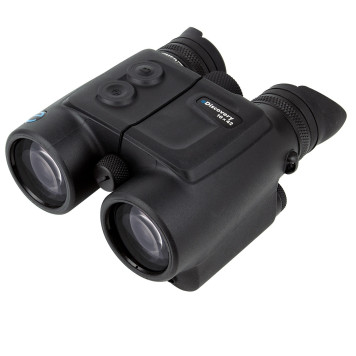
-17%
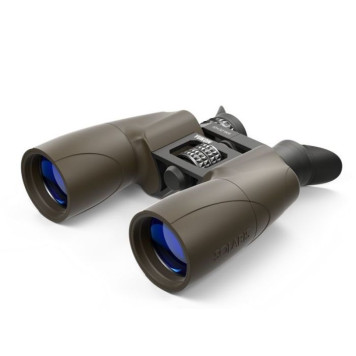
-25%
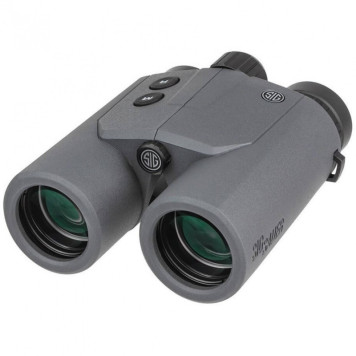
-28%
-25%
SOLD OUT
SOLD OUT
SOLD OUT
SOLD OUT
SOLD OUT
SOLD OUT
Binoculars
Good binoculars do more work on a hunt than the rifle. Before any shot you have to find the animal, identify it and judge it, and most of that happens at dawn or dusk, when the naked eye can no longer tell a boar from a stump. This category holds 115 models, from pocketable 8x32 glass to bright 56 mm twilight binoculars, chosen by hunters who sit in high seats, stalk through forest and glass open fields.
Who hunting binoculars are for
Hunting binoculars are for finding, identifying and selecting game before the shot. They serve hunters waiting in high seats, stalkers moving through cover and anyone counting or watching wildlife. Unlike a riflescope, binoculars let you study ground for hours with both eyes, without fatigue and without pointing a weapon at an unidentified target.
In practice they solve several problems at once. In selective hunting you judge antlers, age and body condition through them before the rifle ever comes up. From a high seat they let you sweep a field edge for hours until an animal steps out. For safety they are the most important item you carry: you may only shoot at a target you have positively identified, and in low light that is impossible without decent glass. During driven hunts they confirm there is no beater or dog behind the animal, which is why many hunters treat them as mandatory kit next to the knife and ammunition.
Types of binoculars by hunting style
Two numbers define what a pair is for: magnification and objective diameter in millimetres. For forest and driven hunts choose 8x42, for open fields 10x50, for twilight stands 8x56 or 10x56. A larger objective gathers more light but adds weight on your neck through a long day outside.
All-round 8x42 and 8.5x50
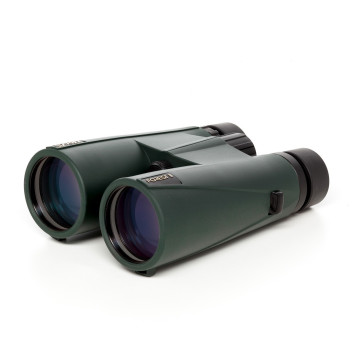
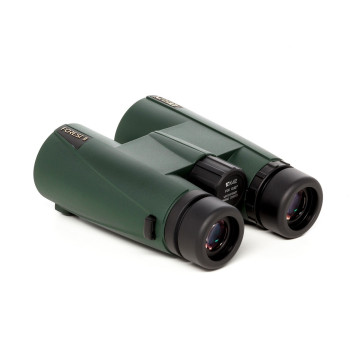
Eight-power magnification gives a wide field of view and a steady handheld image, which suits most hunting in this region: forest edges, field margins, driven days. In this class the category offers Delta Optical Forest II 8x42 and the brighter Forest II 8.5x50, which gathers more light as the evening fades.
10x42 and 10x50 for open ground
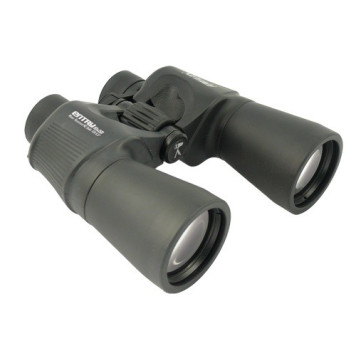
Ten-power glass earns its place where game appears several hundred metres away: meadows, fields, clear-cuts. The image is more sensitive to hand shake, so brace your elbows on the high seat rail for longer sessions. Options here include Forest II 10x42, Forest II 10x50 and Entry 10x50.
Twilight class: 8x56, 10x56 and 12x56
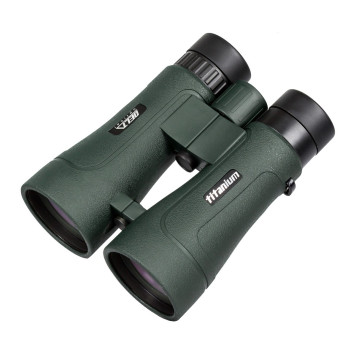
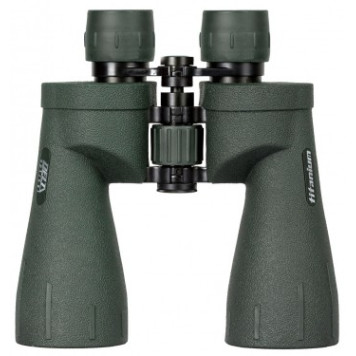
A 56 mm objective at eight power produces a 7 mm exit pupil, the maximum a dark-adapted eye can use. This class exists for night sessions over boar bait sites. It includes Delta Optical Titanium 8x56 ROH, 10x56 ROH, 12x56 ROH and the Titanium 8x56 ED, whose ED glass reduces colour fringing on high-contrast edges.
Compact 8x32 and 10x32
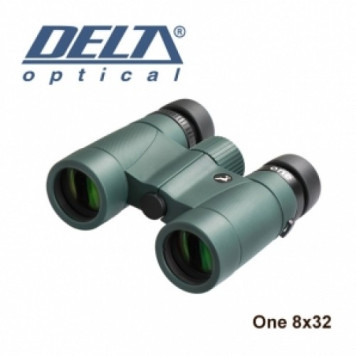
The 32 mm class weighs the least, so it fits days when you carry optics for hours but use them briefly: driven hunts, scouting new ground, following up wounded game with a dog. Delta Optical One 8x32 and One 10x32 fit in a jacket pocket.
High magnification 12x50, 16x50 and 20x50
The Voyager II models at 12, 16 and 20 power are observation tools for a fixed position: game counts, scouting distant ground, judging a trophy far across a field. Nobody holds this magnification steady by hand, so plan on a rest or a tripod.
How to choose binoculars for hunting
Start by answering where and when you hunt most: daytime driven hunts in forest need very different glass from night sessions over bait. Then balance magnification, objective size and weight against your style of hunting. A practical order of decisions looks like this:
- Magnification: 8x for forest and driven hunts, 10x for open fields, 12x and up for observation from a rest.
- Objective diameter: 42 mm for daylight, 50 mm as an all-rounder, 56 mm for twilight and night.
- Exit pupil: divide the objective by the magnification. Twilight work needs at least 5 mm, night work 7 mm.
- Weight: it matters little in a high seat, but every hundred grams counts on your neck after hours of stalking.
- Sealing: autumn rain and temperature swings fog unsealed models from the inside.
- Eye relief: if you glass with glasses on, check that you see the full field with the eyecups folded down.
Field technique and care
Binoculars last as long as your care allows, and what you see depends on technique. Carry them on a chest strap, scan ground in a system rather than at random, and clean lenses only with a proper cloth. A few habits noticeably improve results in rain and fading light.
Sweep in bands: move the view slowly across, drop lower, come back. Eyes catch movement, so pause on every suspicious shape and wait. In twilight look slightly off-centre, the edge of your retina is more sensitive in the dark. When stalking, hold your breath for the moment of glassing or lean against a tree to kill the shake. Stepping out of a warm car fogs cold lenses, so give the optics a few minutes to match the air. Blow sand off the glass before wiping, otherwise you grind it into the coatings. In rain keep the eyepieces pointed down or capped, drops on the eyepiece side hurt more than on the objective. After a wet hunt never dry the glass by a stove, leave it at room temperature in an open case.
Delta Optical series in this category
The category is built around Delta Optical, a Polish optics maker well known among hunters here. The series form clear steps: Entry for a first pair, One for compactness, Voyager II for high magnification, Forest II for everyday hunting, and Titanium ROH plus Titanium ED for the twilight class.
Entry 7x50 and 10x50 make an affordable first pair. One 8x32 and 10x32 suit those who value low weight above all. The Forest II range from 8x42 to 12x50 covers the most common hunting scenarios. The Titanium line with its 56 mm objectives is built for serious work in the dark hours, and the ED version gives a cleaner image in harsh contrast. The Sailor 7x50 with its large exit pupil also earns a place on duck hunts around water.
Binoculars are one link in the observation chain: for the dark hours consider night vision devices or thermal imaging devices, for the shot pick an optical scope, and mount it with scope mounts. If you are unsure which model fits your hunting, write to us and we will advise.