
Jackets
Women's hunting jackets cut for a woman's build: membrane, insulated winter, camouflage and blaze models from Härkila, Seeland, Alaska and Swarovski. Built for long sits in a high seat, quiet stalking and driven hunts in any weather.
Jackets
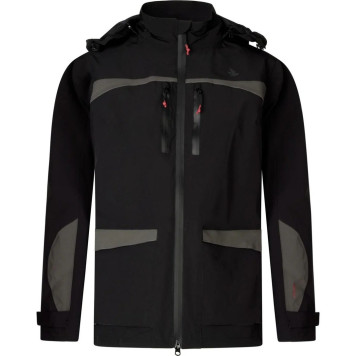
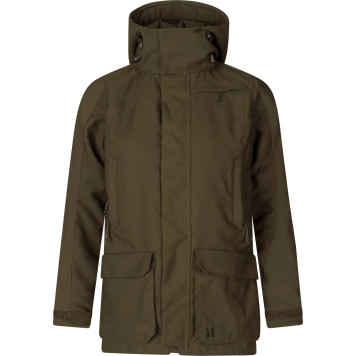
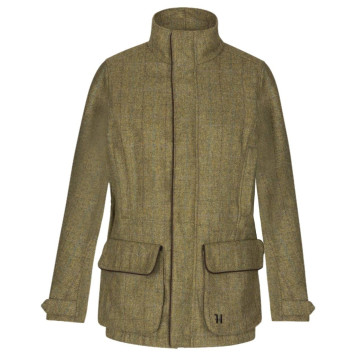
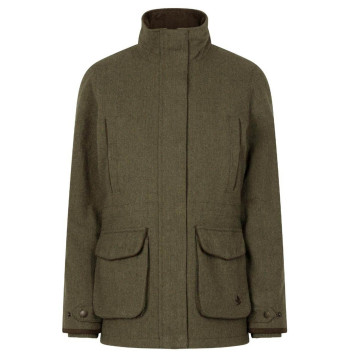
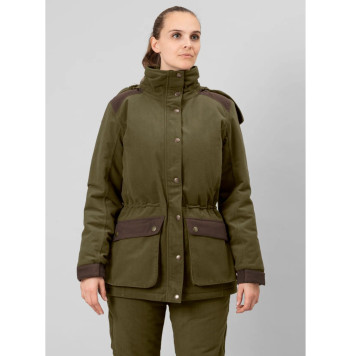
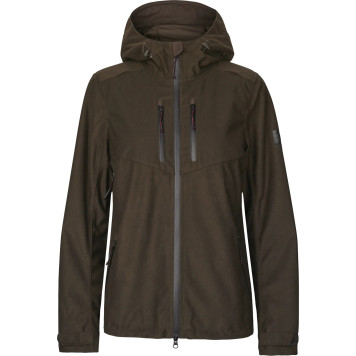
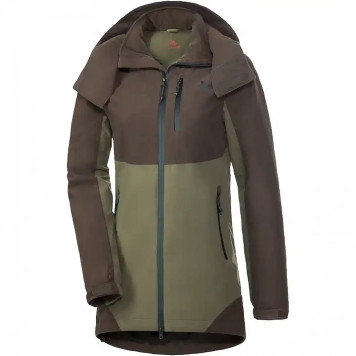
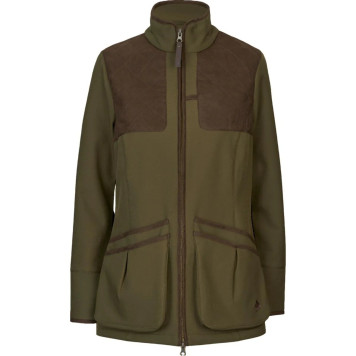
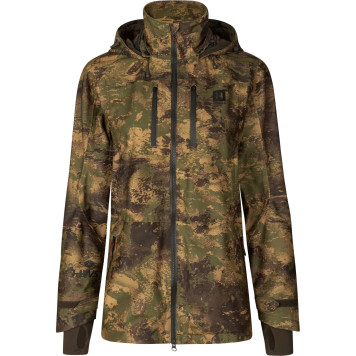
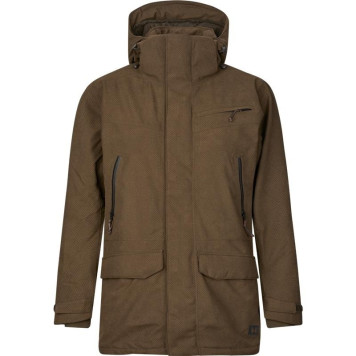
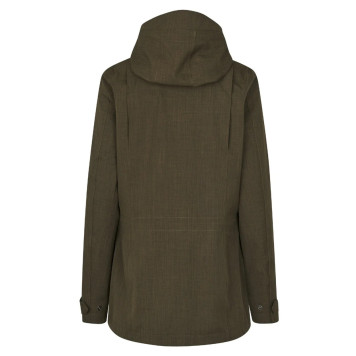
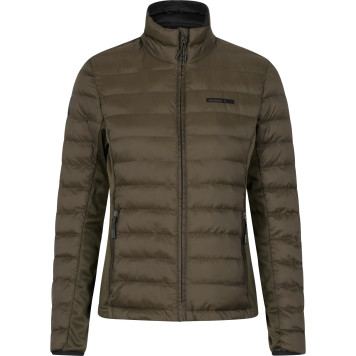
A women's hunting jacket is not a men's model in a smaller size. It is cut for a woman's build: narrower shoulders, a different sleeve curve, a length that keeps your lower back covered while you sit in a high seat or bend over downed game. This category holds women's models from Härkila, Seeland, Alaska and Swarovski, from light autumn shells to insulated winter models. All of them use quiet fabrics, earth tones or camouflage patterns, and pockets placed so you can reach them with a rifle in your hands.
Who these jackets are for
These jackets are made for women who spend hours in a high seat, stalk through wet forest or stand on the line during driven hunts. Four things separate them from town clothing: fabric that stays silent when a branch drags across it, colours that dissolve into the woodland, a cut that lets you mount a rifle without the shoulders binding, and pockets you can reach while seated. Ordinary sportswear rustles, shines and pulls tight exactly when you raise your arms.
The women's cut has a practical purpose here. A cut that is too wide flaps in the wind and snags on brush; one that is too tight leaves no room for a warm mid layer. Dedicated women's lines such as the Härkila Metso Hybrid Lady or Seeland Key-Point Kora leave space for a jumper while keeping a quiet, close silhouette.
Jacket types by hunting style
The category splits into five working groups: membrane shells for rain and wind, insulated winter models for long sits, camouflage options for stalking, light shoulder-season models, and blaze models for driven hunts. Most hunters end up owning at least two, one for the mild season and one for winter. Each group below is described with the actual models you will find in this category.
Membrane jackets for rain and wind
The Härkila Pro Hunter X and Alaska Superior Pro stand for this group: a waterproof outer, taped seams and deep pockets. A shell like this holds off a full day of drizzle and wet snow, which makes it the workhorse for the autumn season when the weather turns every hour. Underneath, you dress in layers matched to the temperature.
Insulated jackets for long sits
The Härkila Metso winter, the Expedition Down and the Swarovski Puff are built for the hours when you sit motionless in freezing air. A still body loses heat far faster than a walking one, so the insulation in these models is chosen for waiting in a high seat rather than covering ground. Pick the down-filled Expedition Down for dry cold days.
Camouflage jackets for stalking
The Seeland Avail in InVis MPC green and the Hawker Advance in PRYM1 Woodland break up the human outline against a forest background. That matters when you stalk deer or wait for birds at short range, where a single contrasting patch gives you away. Both models are light, so they suit mobile hunting.
Light models for the shoulder season
The Härkila Dagny, Estrid HWS, Retrieve and Seeland Glyn fill the gap between warm autumn and true winter. These are mid-warmth models for September and October mornings, when a membrane shell runs too hot and winter insulation is too much. The Retrieve also comes as a waistcoat, which slips under a thicker shell once the cold arrives.
Blaze jackets for driven hunts
The Alaska Superior Pro BT in Blaze answers the safety question on a driven hunt: the other shooters on the line see you from far off, while deer perceive orange only weakly. If you shoot driven hunts regularly, a blaze model or at least a blaze layer over it is a requirement, not a preference.
How to choose a women's hunting jacket
Start by naming the hunting you actually do most: sitting, stalking or driven days. That decides whether warmth, low weight or visibility comes first. Then work through the remaining points in this order:
- Hunting style. Choose an insulated model for sitting, a light and quiet one for stalking, blaze elements for driven hunts.
- Rain protection. A membrane is essential if you hunt in any weather; for dry winter days down insulation does the job.
- Size with layers. Try it on over the jumper you will really wear, and raise your arms as if mounting a rifle.
- Noise. Run your hand across the fabric; if you hear it in the shop, a deer will hear it far better in the forest.
- Pockets. Check that you can reach cartridges and your phone while wearing gloves and sitting down.
Practical advice in the field
The warmest jacket will not save you if you wear cotton underneath: once damp, it pulls heat out of your body for the rest of the day. Dress in layers and treat it as the outer shell against wind and precipitation. On the walk to the high seat, carry the outer layer in your pack and put it on after you sit down, so you arrive dry instead of sweated through.
Scent control matters as much as colour. Keep your hunting jacket out of the wardrobe with your everyday clothes and never wash it in scented detergent. Wash membrane models rarely and with technical wash products, because every cycle wears down the water-repellent finish. After a wet day, dry it on a hanger, away from direct radiator heat.
Brands in this category
The category is built on Scandinavian makers whose clothing is designed for a climate close to Lithuania's. Härkila carries the widest women's line here, from the Dagny to the down-filled Expedition Down; Seeland is strongest in camouflage and mid-warmth models; the Alaska Superior series covers membrane and Blaze versions; and the Swarovski Puff works as a light warm layer for glassing with optics. All four brands size their women's ranges consistently, so a second piece can be ordered by the size you already know.
Match the rest of your clothing to the jacket: women's hunting trousers, waistcoats as a warm mid layer and technical underwear. If you are unsure about a size or model, write to us and we will advise based on how you hunt.