
.223 REM.
.223 Rem rifle cartridges for hunters and sport shooters: light V-MAX and Varmint X bullets for foxes and other small predators, FMJ for practice and heavy HPBT match loads. The shelf holds Norma, Sako, Geco, GGG, Sellier&Bellot, RWS and Winchester ammunition.
SOLD OUT
SOLD OUT
SOLD OUT
SOLD OUT
SOLD OUT
SOLD OUT
SOLD OUT
SOLD OUT
.223 REM.
This category holds .223 Rem cartridges for rifles. The calibre is a favourite among hunters and sport shooters for a simple reason: mild recoil, a flat trajectory and an affordable price per shot. You will find Norma, Sako, Geco, GGG, Sellier&Bellot, RWS and Winchester loads with bullets from roughly 53 to 77 grains.
What the .223 Rem calibre is good for
The .223 Rem is a small-predator and sport-shooting calibre. A well-placed bullet drops a fox, raccoon dog, badger or beaver on the spot, while at the range it lets you fire long strings without fatigue or a painful ammunition bill. Hunting regulations define which game a calibre may be used on, so check the current rules before the season.
Night hunts over bait, long sits in a high seat above an active den and calling predators on open fields all demand a cartridge that flies flat and works instantly on impact. Light, fast bullets do this job best: out to 200 metres the drop is minimal, so you hold straight on fur.
Sport shooters value the same qualities. The calibre is common in light bolt rifles and semi-auto platforms used for training and club matches, where consistent accuracy over hundreds of rounds matters more than raw power. Heavier match bullets stretch its useful range well past what light varmint loads manage.
Bullet types in this category
Four bullet constructions make up the shelf: fast-expanding polymer-tipped, classic soft point, full metal jacket for training and heavy HPBT match bullets. Each behaves differently on game and on paper, so pick by target and distance rather than by price alone. The sections below match the loads you will actually find here.
Polymer-tipped bullets
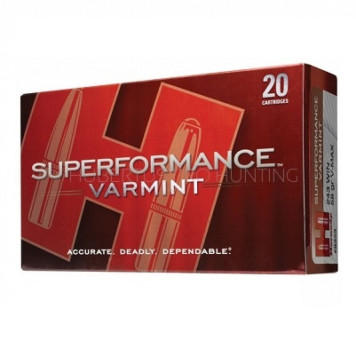
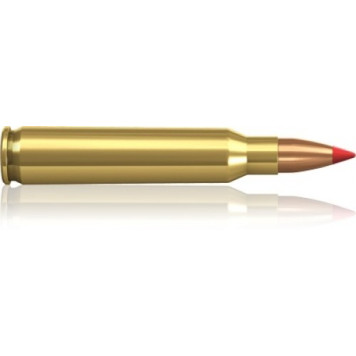
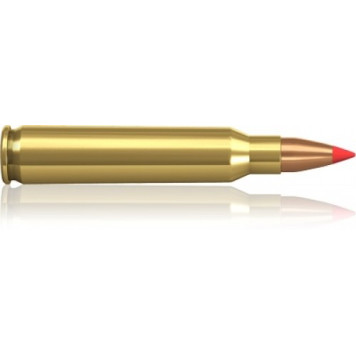
Norma V-MAX, Norma Tipstrike and Winchester Varmint X carry a sharp polymer tip that improves the ballistic coefficient and triggers violent expansion. The bullet dumps its energy instantly, so a fox or raccoon dog drops where it stands. This is the first choice for night predator hunting with a thermal or night-vision sight.
Soft point bullets
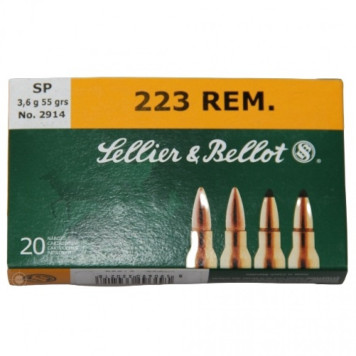
Sellier&Bellot SP, Geco SP, Sako Gamehead and RWS Teilmantel expose lead at the nose. Expansion is more controlled than with polymer-tipped varmint bullets, so the pelt takes less damage. Norma Oryx bonds the lead core to the jacket, keeping more weight and penetrating deeper. It is a sound all-round pick for a hunter who wants one load for varied situations.
Full metal jacket bullets
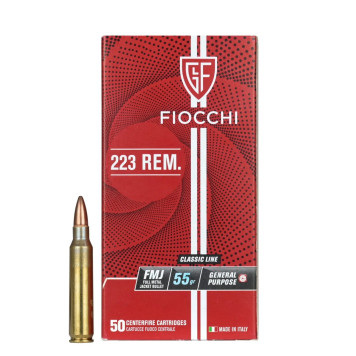
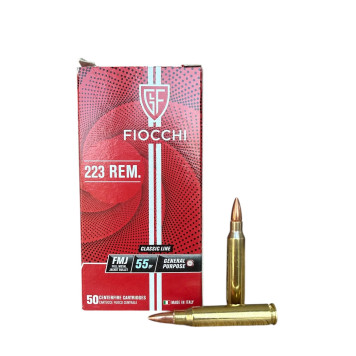
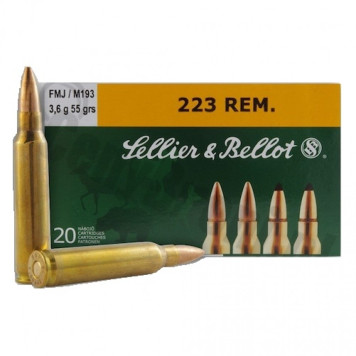
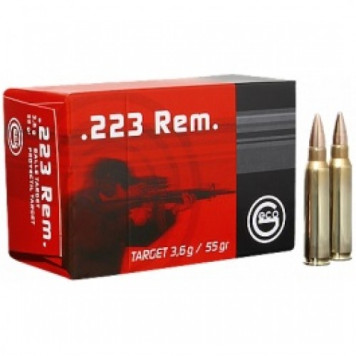
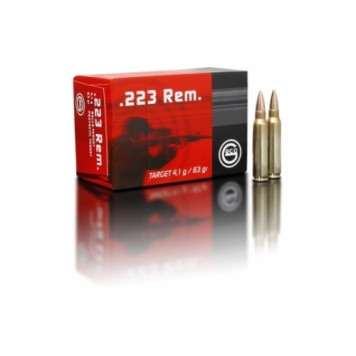
Sellier&Bellot FMJ, Sako Speedhead and Geco Target are range loads. The bullet does not expand and the price per shot is lower, which makes them right for zeroing, checking your optic after transport and building skill before the season. They are not for hunting, as they fail to create an adequate wound channel and leave game wounded.
Heavy HPBT bullets
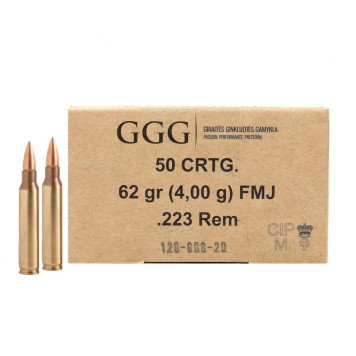
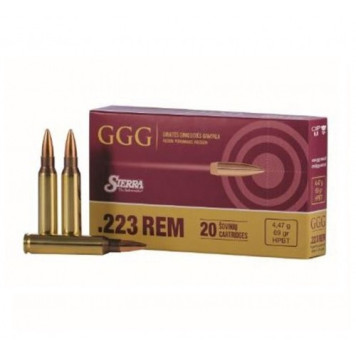
Cartridges from the Lithuanian maker GGG with 69 and 77 grain HPBT bullets are built for precision work at longer distances. A heavy bullet drifts less in wind and keeps its speed longer, so groups on distant targets stay tighter. These loads need a faster twist rate, so check your barrel before buying.
How to choose a cartridge for your rifle
Your barrel's twist rate, your quarry and your usual shooting distance decide the cartridge. Light 53 and 55 grain bullets stabilise in nearly any barrel, while the 69 and 77 grain match loads need a faster twist. Before stocking up, compare a few factory loads through the same barrel.
- Check the twist rate: a 1:12 barrel likes bullets up to 55 grains, 1:9 stabilises 63 grains, and 1:8 or 1:7 handles the 69 and 77 grain HPBT.
- Define the purpose: take expanding V-MAX, SP or Oryx bullets for hunting; FMJ is enough for practice.
- Judge the distance: inside 150 metres any construction works, while beyond that the pointed polymer-tipped and heavy match bullets pull ahead.
- Think about the pelt: if you plan to work a fox skin, pick a controlled-expansion SP over an explosive varmint bullet.
- Test before you commit: buy a box each of two or three loads, shoot groups from a stable rest and stay with the one your barrel groups tightest.
Practical advice in the field
Zero your rifle at 100 metres and note the drop at 200. On night fox hunts most shots come between 80 and 150 metres, so with the flat .223 Rem trajectory you hold dead on. Place the shot on the shoulder or chest so the animal drops on the spot and you avoid tracking blood in the dark.
Store ammunition dry and cool, and carry the same lot you zeroed with, because different lots can print to a different point. A cold barrel often places the first shot slightly apart from a warm one, so in the high seat trust your cold-bore zero. After a wet hunt, clean the barrel and inspect remaining cases for traces of moisture.
Brands
The category gathers proven European and American makers. Norma and Sako load hunting ammunition under strict quality control, Geco and RWS cover a wide span from Target to Express lines, Sellier&Bellot keeps prices accessible, and Winchester brings the American varmint tradition with the Varmint X series.
GGG from Giraitė deserves a separate mention: Lithuanian-made cartridges with heavy HPBT bullets have a loyal following among sport shooters. Local production means steady supply and a strong price-to-quality ratio for regular training.
If your rifle takes another calibre, look at .222 Rem cartridges, .243 Win cartridges or .22 calibre ammunition. If you are unsure which load suits your barrel and your hunting, write to us and we will advise.